Two looms, two accounts of the divine world, and a victory that power will not acknowledge.
Before she was a spider, Arachne was a woman people came to watch.
They admired more than her finished cloth. They watched the wool passing through her fingers, the thread gathering around the spindle, the patient appearance of a pattern. Even the nymphs left their vineyards and rivers to stand beside her work. She had neither a royal ancestry nor a celebrated birthplace. What drew them was the movement of her hands.1
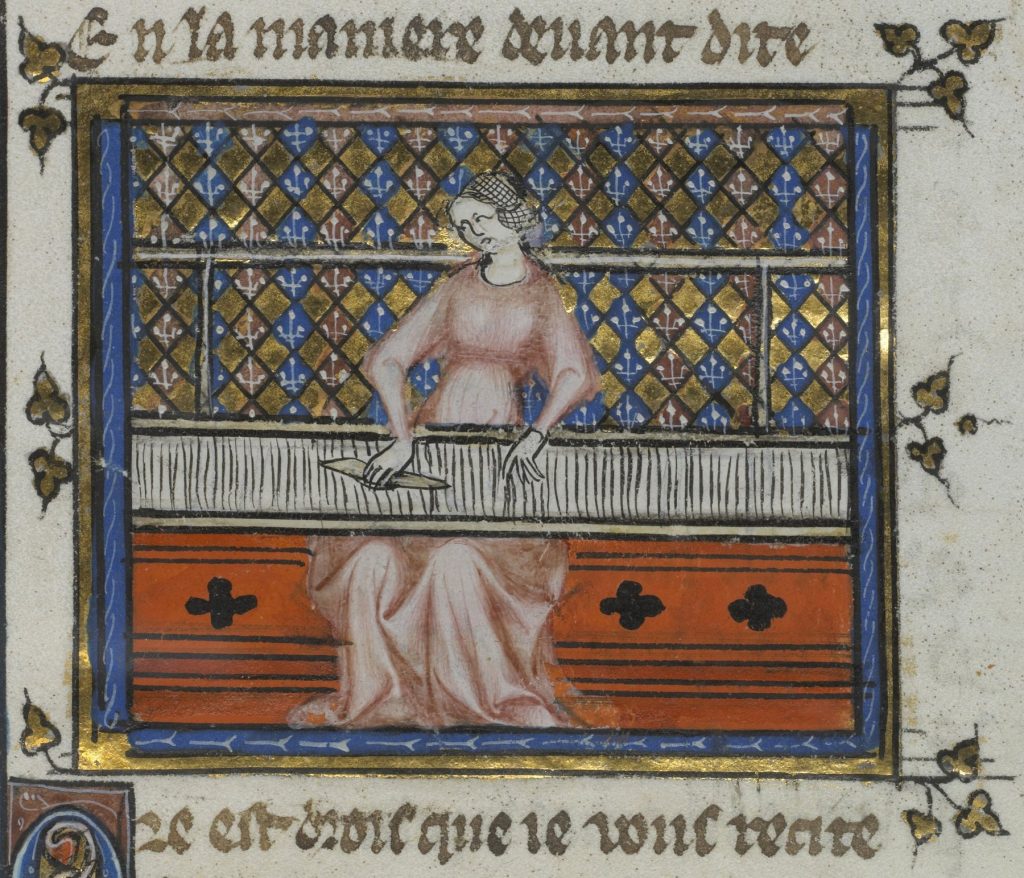
Such ability, they supposed, must have come from a goddess.
Arachne refused the explanation. Let the goddess come and compete. Let the work decide.
When Athena finally stood opposite her, their quarrel became more than a contest of skill. They wove different accounts of the same divine world. The goddess showed its majesty, its gifts, and the punishments awaiting those who challenged it. The mortal showed the disguises beneath which its rulers pursued their desires.2
One tapestry asked the beholder to recognize the glory of heaven. The other asked the beholder to look at those who had paid for it.
The principal source is Ovid’s Metamorphoses 6.1–145. Extended Ovid quotations below reproduce Henry Thomas Riley’s public-domain translation, first published in 1851; paragraphing and quotation typography are adjusted for reading. Narration uses the Greek names Athena, Zeus, Poseidon, and Hera, while quotations retain Minerva or Pallas, Jupiter, Neptune, and Juno. The symbolic and moral readings are interpretations of the episode, not additional events supplied by Ovid.1
The name that contains her fate
Arachne, Greek Ἀράχνη (Aráchnē), bears the ordinary Greek word ἀράχνη, meaning “spider,” and also “spider’s web.” Her name already contains the creature she will become.3
The transformation gives a human history to an encounter with the natural world. A spider hanging in a corner becomes the remainder of a person: a woman whose extraordinary ability survives the destruction of her human life.
But the name does not tell us whether the punishment was deserved. It joins the woman to the creature without settling the moral distance between them.
To understand that distance, we must return to the loom.
The dyer’s daughter
Ovid introduces Arachne through work rather than rank:
She was renowned not for the place of her birth, nor for the origin of her family, but for her skill alone. Idmon, of Colophon, her father, used to dye the soaking wool in Phocæan purple. Her mother was dead; but she, too, was of the lower rank, and of the same condition with her husband. Yet Arachne, by her skill, had acquired a memorable name throughout the cities of Lydia; although, born of a humble family, she used to live in the little town of Hypæpæ. Often did the Nymphs desert the vineyards of their own Tymolus, that they might look at her admirable workmanship; often did the Nymphs of the river Pactolus forsake their streams. And not only did it give them pleasure to look at the garments when made, but even, too, while they were being made, so much grace was there in her working.
Ovid, Metamorphoses 6.7–18, translated by Henry Thomas Riley (1851). Read the passage1
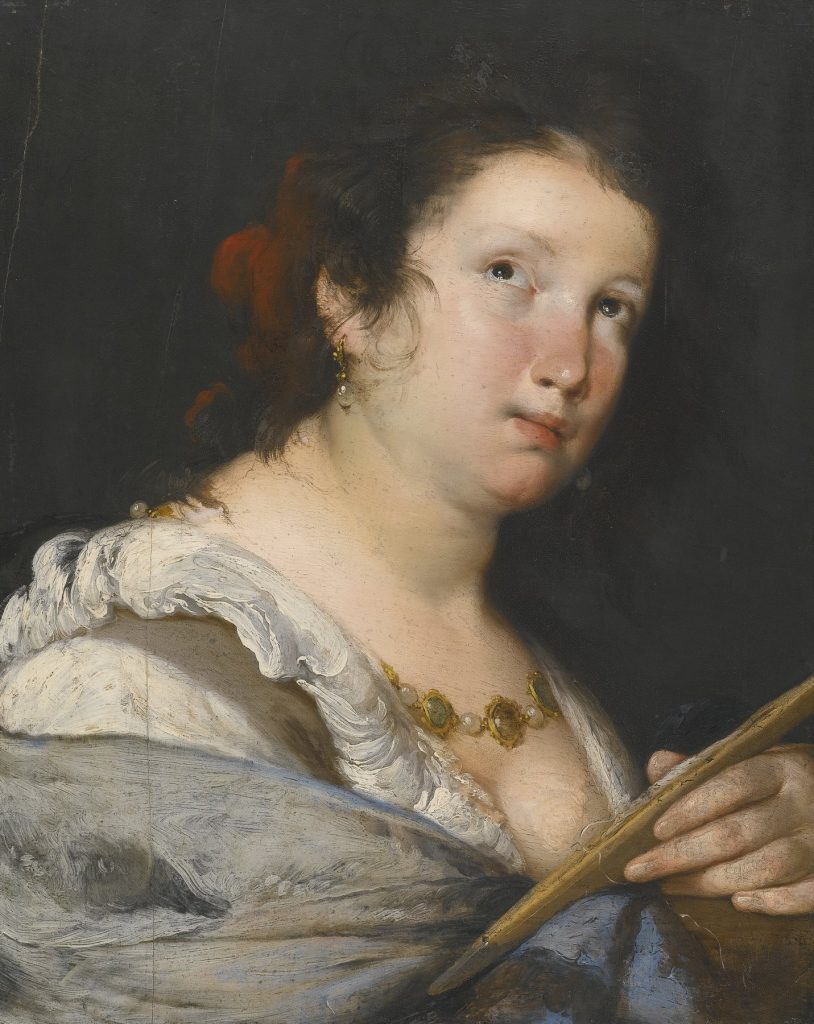
Before the cloth becomes an image, it passes through a material world of wool, dye, preparation, and labor. Arachne emerges from that world, not from a throne.
Ovid describes her skill so admiringly that he says one would recognize Athena’s teaching in it. Arachne denies the attribution. The quarrel is not over whether she possesses an exceptional gift. Everyone can see that. It is over what the gift obliges her to acknowledge.1
Does honoring the goddess diminish the mortal? Or does the mortal’s refusal turn independence into ingratitude?
Arachne answers with a challenge:
“Let her contend with me. There is nothing which, if conquered, I should refuse to endure.”
Ovid, Metamorphoses 6.25, translated by Henry Thomas Riley (1851). Read the passage1
The condition matters: if conquered. She offers to accept the consequences of defeat. She does not concede defeat merely because her opponent is divine.
Athena has already been considering how to defend her honor. At the beginning of the episode, after hearing the Muses’ account of their own contest, she resolves not to allow her divinity to be slighted without punishment.4
The weaver imagines a trial of skill. The goddess arrives with the preservation of authority already at stake.
The warning before the loom
Athena first appears as an old woman. Her warning permits Arachne distinction, provided that distinction remains within a boundary:
Pallas personates an old woman; she both places false gray hair on her temples, and supports as well her infirm limbs by a staff. Then thus she begins to speak: “Old age has not everything which we should avoid; experience comes from lengthened years. Do not despise my advice; let the greatest fame for working wool be sought by thee among mortals. But yield to the Goddess, and, rash woman, ask pardon for thy speeches with suppliant voice. She will grant pardon at my entreaty.”
The other beholds her with scowling eyes, and leaves the threads she has begun; and scarcely restraining her hand, and discovering her anger by her looks, with such words as these does she reply to the disguised Pallas: “Thou comest here bereft of thy understanding, and worn out with prolonged old age; and it is thy misfortune to have lived too long. If thou hast any daughter-in-law, if thou hast any daughter of thy own, let her listen to these remarks. I have sufficient knowledge for myself in myself, and do not imagine that thou hast availed anything by thy advice; my opinion is still the same. Why does not she come herself? why does she decline this contest?”
Then the Goddess says, “Lo! she is come;” and she casts aside the figure of an old woman, and shows herself as Pallas. The Nymphs and the Mygdonian matrons venerate the Goddess. The virgin alone is not daunted. But still she blushes, and a sudden flush marks her reluctant features, and again it vanishes; just as the sky is wont to become tinted with purple, when Aurora is first stirring, and after a short time to grow white from the influence of the Sun.
Ovid, Metamorphoses 6.26–49, translated by Henry Thomas Riley (1851). Read the passage5
Arachne is not gentle in her resistance. She insults someone she takes to be elderly and scarcely restrains an angry hand. Ovid goes on to describe her as rushing toward destruction in pursuit of a foolish victory. The poem does not require us to invent her recklessness.5
Yet Athena does not decline the challenge either. She stops advising and takes her place at the loom.
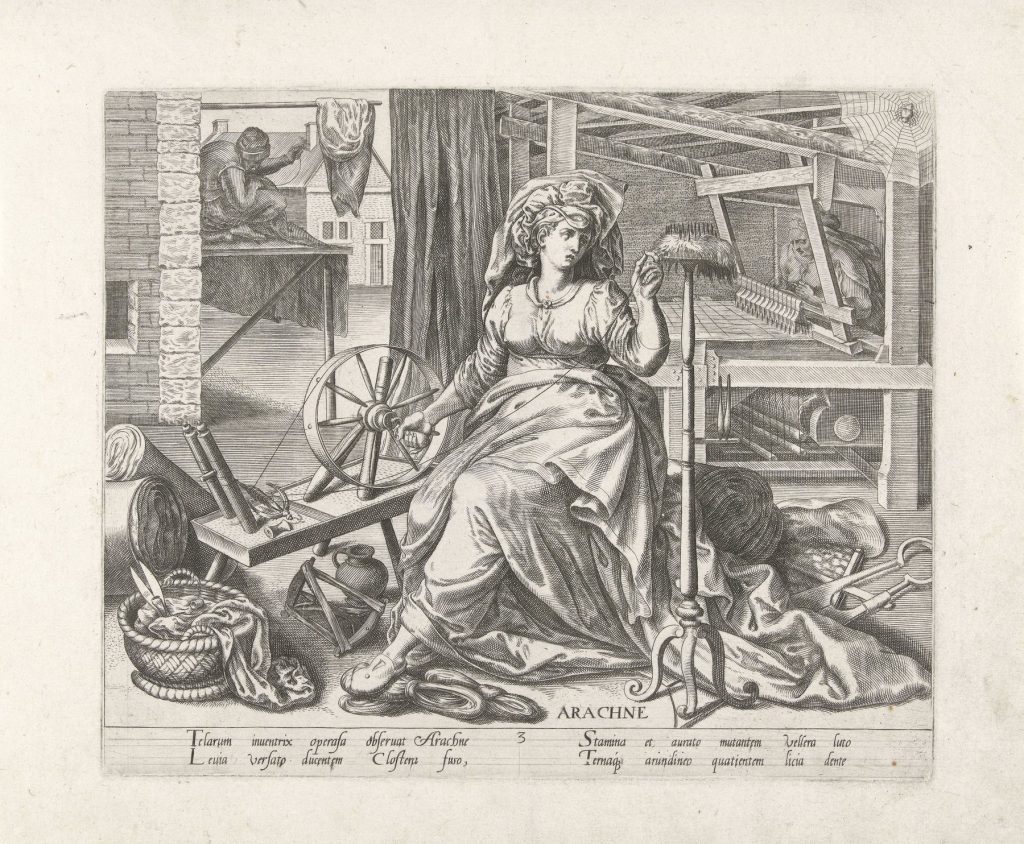
For a moment, the difference in rank gives way to the likeness of their activity. Both have practiced arms. Both work eagerly enough to forget fatigue. Ovid compares their shifting colors to a rainbow, whose neighboring shades meet so subtly that the eye cannot find the boundary. Gold enters the thread; ancient stories appear in both works.6
Whatever else separates them, neither woman is a fraud at her craft.
Athena’s tapestry: the glory of the father’s kingdom
Athena begins with an assembly:
Pallas embroiders the rock of Mars in Athens, the citadel of Cecrops, and the old dispute about the name of the country. Twice six celestial Gods are sitting on lofty seats in august state, with Jupiter in the midst. His own proper likeness distinguishes each of the Gods. The form of Jupiter is that of a monarch.
Ovid, Metamorphoses 6.70–74, translated by Henry Thomas Riley (1851). Read the passage7
The gods sit in their proper places, with Zeus at the center. Each is recognizable; none needs a disguise. This is authority presenting itself for acknowledgment.
Within that assembly, Athena depicts her contest with Poseidon for Athens. Poseidon strikes the rock and brings forth seawater. Athena produces the olive tree, the gods admire it, and her victory completes the central scene. Around it, she arranges four examples of mortals punished for challenging divine superiority.7
Rhodope and Haemus, who assumed divine names, become mountains. A woman defeated by Hera becomes a crane. The Trojan Antigone, daughter of Laomedon, becomes a stork. The remaining corner contains a father grieving over his transformed daughters:
The only corner that remains, represents the bereft Cinyras; and he, embracing the steps of a temple, once the limbs of his own daughters, and lying upon the stone, appears to be weeping. She surrounds the exterior borders with peaceful olive. That is the close; and with her own tree she puts an end to the work.
Ovid, Metamorphoses 6.98–102, translated by Henry Thomas Riley (1851). Read the passage7
Athena does not hide all suffering. She includes it, but gives it a place within a justifying story. These people suffer because they challenged the gods; their fate instructs the observer where not to stand.
That distinction matters. An account can conceal the moral problem of violence without concealing that violence occurred. It can display the punishment while arranging the scene so that the punishment seems to explain itself.
Read sympathetically, Athena’s cloth honors a civilization sustained by gifts, gratitude, and limits. Read suspiciously, its peaceful border encloses a warning: the divine order offers benefits, but reserves the right to destroy those who dispute its standing.
Ovid makes the warning explicit. The four examples are intended to teach Athena’s rival what reward to expect.7
Arachne answers in the same medium.
Arachne’s tapestry: what the glory leaves out
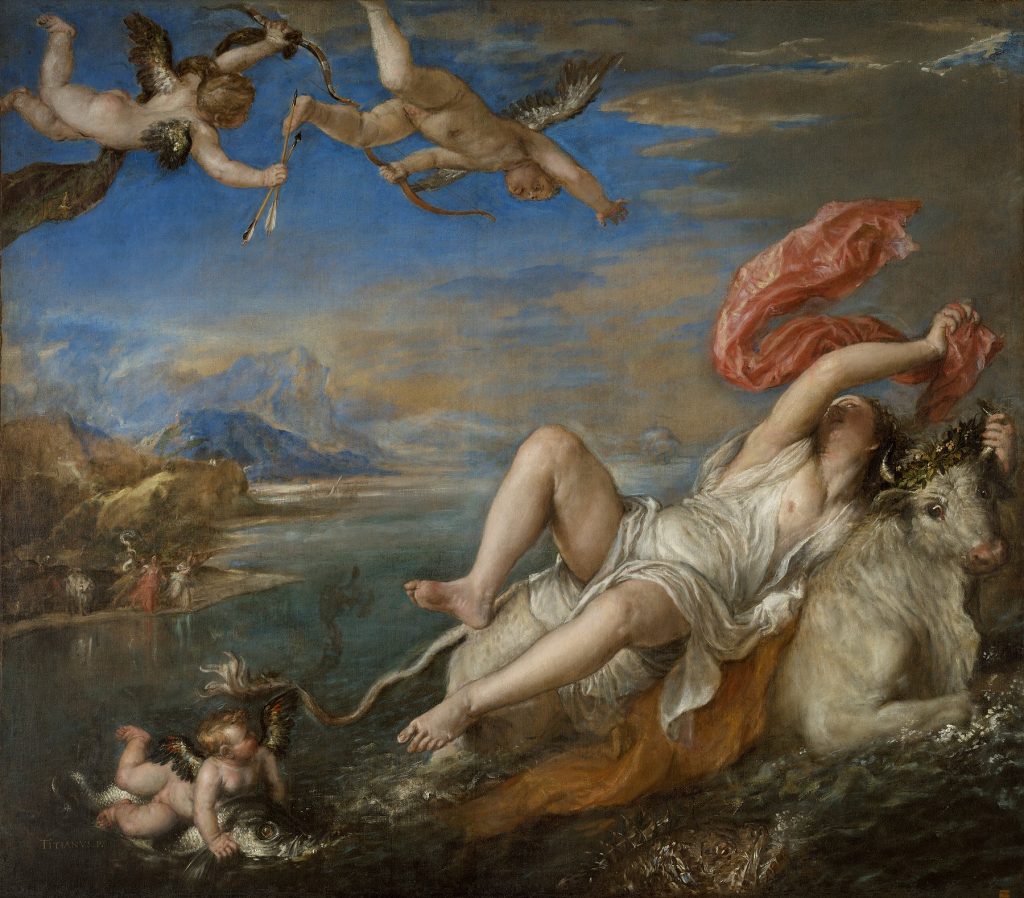
Her first scene shows Europa carried across the water by Zeus in the shape of a bull. But the emphasis falls upon the girl looking back toward the land, calling to her companions, and drawing her feet away from the waves.
The divine adventure becomes someone else’s separation and fear.
The Mæonian Nymph delineates Europa, deceived by the form of the bull; and you would think it a real bull, and real sea. She herself seems to be looking upon the land which she has left, and to be crying out to her companions, and to be in dread of the touch of the dashing waters, and to be drawing up her timid feet. She drew also Asterie, seized by the struggling eagle; and made Leda, reclining beneath the wings of the swan. She added, how Jupiter, concealed under the form of a Satyr, impregnated Antiope, the beauteous daughter of Nycteus, with a twin offspring; how he was Amphitryon, when he beguiled thee, Tirynthian dame; how, turned to gold, he deceived Danaë; how, changed into fire, the daughter of Asopus; how, as a shepherd, Mnemosyne; and as a speckled serpent, Deois. She depicted thee too, Neptune, changed into a fierce bull, with the virgin daughter of Æolus.
Thou, seeming to be Enipeus, didst beget the Aloïdæ; as a ram, thou didst delude Theophane, the daughter of Bisaltis. Thee too the most bounteous mother of corn, with her yellow hair, experienced as a steed; thee, the mother of the winged horse, with her snaky locks, received as a bird; Melantho, as a dolphin. To all these did she give their own likeness, and the real appearance of the various localities.
There was Phœbus, under the form of a rustic; and how, besides, he was wearing the wings of a hawk at one time, at another the skin of a lion; how, too, as a shepherd, he deceived Isse, the daughter of Macareus. How Liber deceived Erigone, in a fictitious bunch of grapes; and how Saturn begot the two-formed Chiron, in the form of a horse. The extreme part of the web, being enclosed in a fine border, had flowers interwoven with the twining ivy.
Ovid, Metamorphoses 6.103–128, translated by Henry Thomas Riley (1851). Read the passage8
Zeus is joined by Poseidon, Apollo, Dionysus, and Cronus. The episodes accumulate until it becomes difficult to dismiss the selection as one unhappy exception. These encounters differ, and some of the female figures are themselves divine. What unites the cloth is its attention to power approaching through disguise, deception, and sexual appropriation.8
Athena shows the gods as they appear when they judge. Arachne shows them as they appear when they pursue.
Her tapestry need not reveal previously unknown events to be subversive. Both women draw upon ancient stories. Arachne changes their arrangement and moral emphasis, bringing the cost of divine conduct into a picture of the divine world.6, 8
Around these images she places flowers and ivy. Beauty does not belong exclusively to the reassuring account.
Then Athena looks at the work.
The unannounced victory
Pallas could not blame that work, nor could Envy censure it. The yellow-haired Virgin grieved at her success, and tore the web embroidered with the criminal acts of the Gods of heaven. And as she was holding her shuttle made of boxwood from Mount Cytorus, three or four times did she strike the forehead of Arachne, the daughter of Idmon. The unhappy creature could not endure it; and being of a high spirit, she tied up her throat in a halter.
Ovid, Metamorphoses 6.129–135, translated by Henry Thomas Riley (1851). Read the passage9
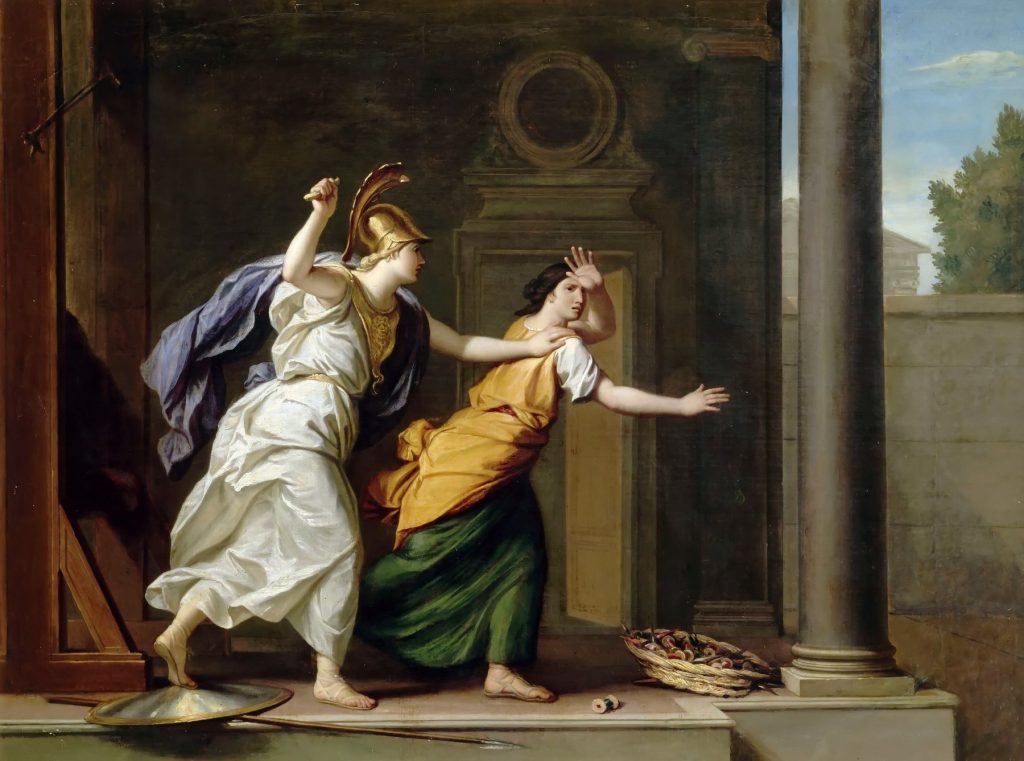
Arachne’s unannounced victory is the most persuasive reading of this turn. Her work survives the test that the goddess cannot bear to accept: neither Athena nor Envy can find fault with it, and its success causes the goddess pain.
That is stronger than saying that nothing has been decided. Something decisive has happened, even though no judge pronounces a winner.
The distinction is between a narrated verdict and an implied victory. Ovid does not say that a panel awards Arachne first place, nor does he identify a technical defect in Athena’s tapestry. He does place the mortal’s faultless achievement immediately before the goddess’s grief, destruction, and assault. The Latin is direct: doluit successu, she grieved at the success.9
In this reading, Arachne wins recognition from the poem that she cannot obtain from her opponent. She has met the challenge without yielding; Athena answers by changing the terms.
Athena’s concern with punishment preceded the weaving. Now the success of the work makes the challenge harder to contain: the mortal has produced something the goddess cannot fault. Force reverses the recognition that skill has earned.4, 9
The instrument makes the reversal visible. A shuttle, moments before a tool of creation, strikes the creator.
Athena does not refute the cloth. She tears it.
Mercy, defiance, and the last word
After the blows, Arachne does not ask for mercy. Ovid records no apology, no retraction, and no acknowledgment that the goddess’s violence has proved her right. Before the contest, Athena had urged her to seek pardon. Afterward, the poem gives neither a renewed offer nor a plea. Instead, Arachne attempts to end her life.5, 9
She could, in principle, have begged. The text does not tell us that doing so would have restored her. Nor does it explain her final act through one motive alone: she is unhappy, unable to endure what has happened, and animosa, spirited or proud.9
We may read the act as a last refusal to submit, but not as a calmly announced plan to become a martyr. Defiance and unbearable distress remain entangled. A martyr-like meaning arises from the larger scene: the artist suffers after giving testimony she does not withdraw. The testimony is already in the tapestry; self-destruction is not what makes it true.
Athena intervenes:
Pallas, taking compassion, bore her up as she hung; and thus she said: “Live on indeed, wicked one, but still hang; and let the same decree of punishment be pronounced against thy race, and against thy latest posterity, that thou mayst not be free from care in time to come.” After that, as she departed, she sprinkled her with the juices of an Hecatean herb; and immediately her hair, touched by the noxious drug, fell off, and together with it her nose and ears.
The head of herself, now small as well throughout her whole body, becomes very small. Her slender fingers cleave to her sides as legs; her belly takes possession of the rest of her; but out of this she gives forth a thread; and as a spider, she works at her web as formerly.
Ovid, Metamorphoses 6.135–145, translated by Henry Thomas Riley (1851). Read the passage10
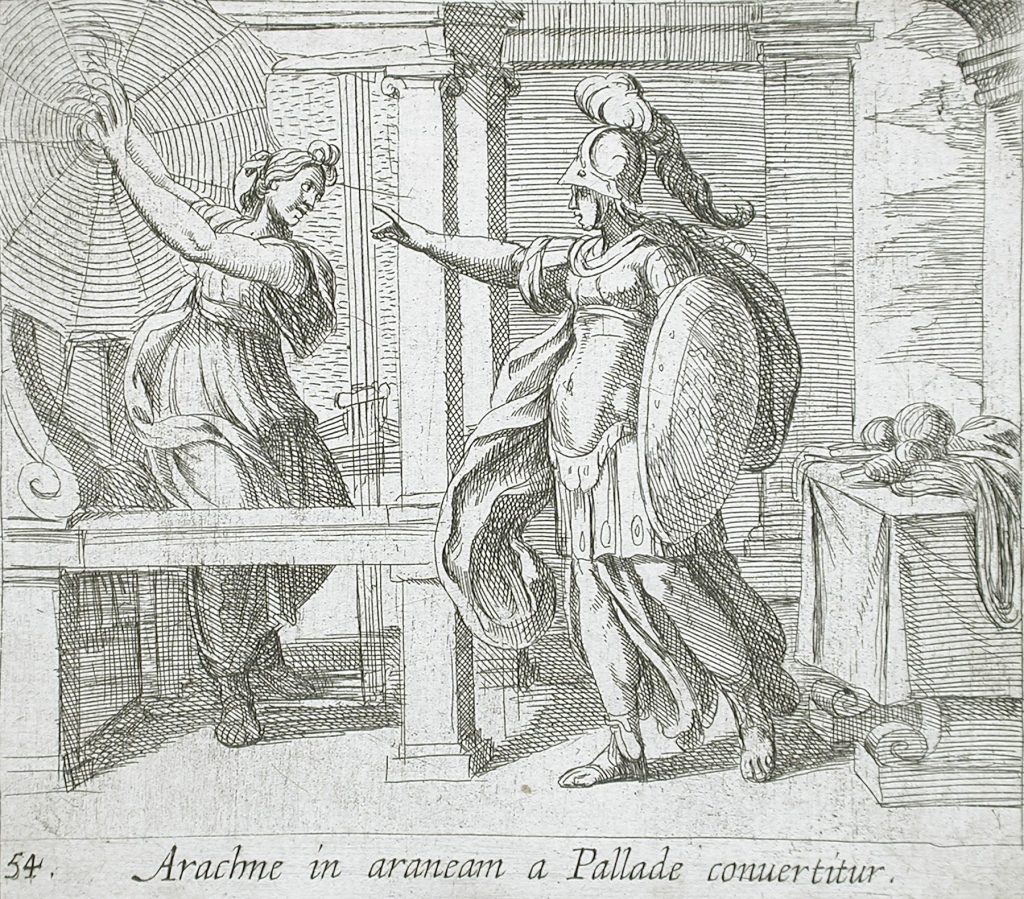
The compassion must remain in the account. So must the sentence.
Athena will not let Arachne die, but neither will she restore the woman who challenged her. In this reading, the goddess insists on the last word: she determines not only the outcome of the encounter but the form in which her rival must continue to exist.
Her pity is real enough to interrupt the death. It is not generous enough to release the artist from punishment.
Arachne refuses the submission Athena seeks. Athena refuses to let that refusal set the terms of the ending.
The work continues, but the woman who demanded recognition has become a spider.
Two women, two accounts of the same order
Athena and Arachne can be read as two opposed feminine narrators: one sustains the majesty of the father’s kingdom; the other makes visible what that majesty excludes from its favorable account of itself.
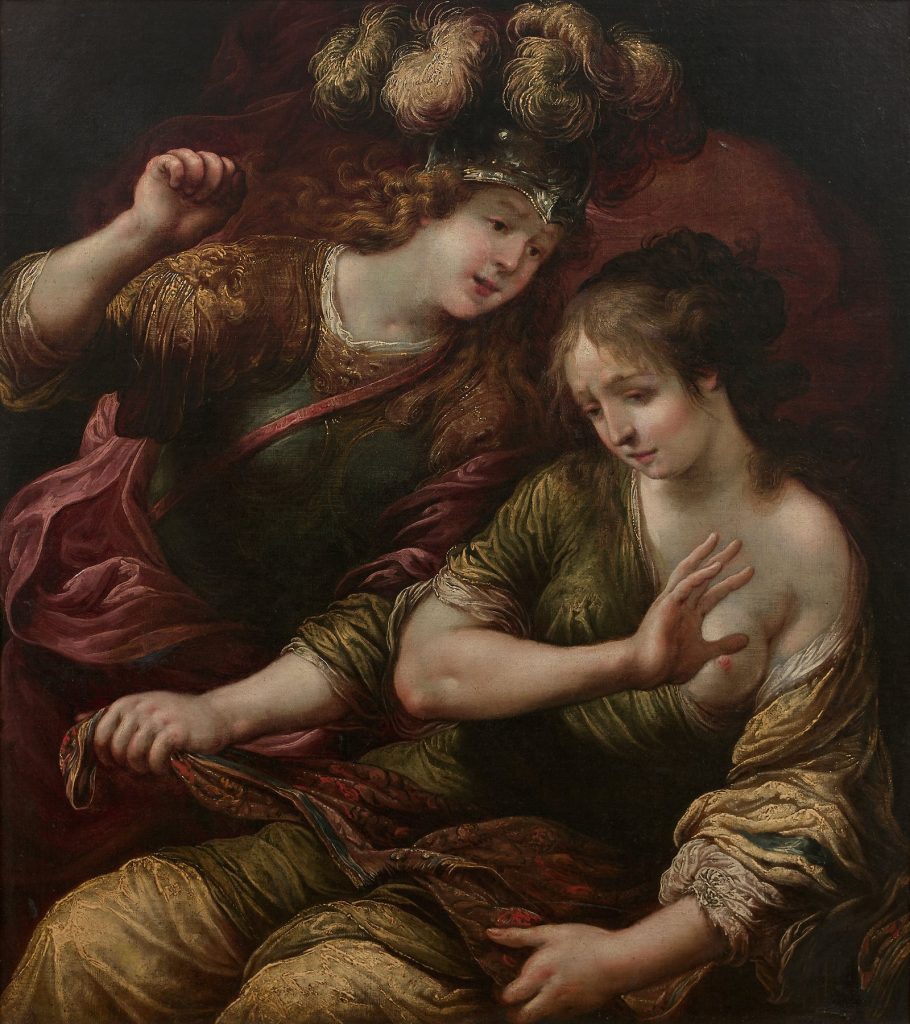
One is the daughter of the king of heaven. The other is the daughter of a dyer. They share an art, but occupy different places within the world their art represents. Their difference concerns allegiance and standing as well as sex.1, 2
Athena’s identification with paternal authority has a particularly explicit parallel in Aeschylus’ Eumenides. During the trial of Orestes for killing his mother, the goddess explains her vote in his favor:
For me no mother bore within her womb,
Aeschylus, Eumenides 734–741, translated by E. D. A. Morshead. Read the passage11
And, save for wedlock evermore eschewed,
I vouch myself the champion of the man,
Not of the woman, yea, with all my soul,—
In heart, as birth, a father’s child alone.
In Aeschylus’ courtroom, Athena declares herself a father’s child. At Ovid’s looms, that allegiance takes a visual form. Her female voice speaks from within paternal authority and helps preserve it.
In the weaving contest, the contrast is already present in the pictures. Athena places Zeus at the center as monarch. Arachne depicts him leaving the recognizable appearance of a monarch to obtain what he desires through other forms.7, 8
The same ruler can be a source of order from one standpoint and a source of violation from another. Arachne’s selection undermines the assumption that divine standing makes divine action morally self-justifying.
Athena weaves the official story of the father’s kingdom: its gifts warrant gratitude, its majesty commands reverence, and its punishments teach obedience. Arachne takes the same inheritance and makes it accuse its rulers. What the first cloth keeps beneath the glory, the second brings before the eye.
Ovid’s own phrase sharpens that accusation: caelestia crimina, the crimes of heaven, or the charges of wrongdoing brought against it. It appears in the narrator’s account of the tapestry’s destruction, not in an invented speech we must place in Arachne’s mouth.9
Their disagreement is therefore not simply truth against lies. The olive tree need not be false for Europa’s fear to matter. The benefaction does not cancel the injury. The injury prevents the benefaction from becoming a complete moral defense.
The god-king’s pursuit of royal women invites a dynastic reading: conquest remembered as divine desire. He crosses the boundaries of other households, hides beneath an animal or borrowed body, and fathers children who carry his sacred ancestry. Europa’s story joins abduction to royal descent: Zeus carries her from Phoenicia to Crete, where she bears Minos and his brothers; Minos later becomes king.12
Herodotus preserves another telling of Europa’s abduction in the opening of his Histories: in the account he attributes to Persian storytellers, Greeks land in Phoenicia and carry off the king’s daughter. The divine encounter can also be told as a human raid.13
Read through this double inheritance, the animal disguises can veil memories of seizure, intrusion, and the founding of new ruling lines. The royal genealogy preserves the union while drawing attention away from its cost. What the dynasty celebrates as descent from heaven, the abducted woman experiences as removal from home. The glory of empire suppresses the crimes of its founders by turning the injury into the beginning of a sacred ancestry.
Arachne reverses that movement. She returns the gaze from the ruler’s descendants to the woman being taken. Her cloth becomes both a memorial to the cost of divine appetite and a protest against the kingdom’s right to bury that cost beneath its glory.
Athena could answer the accusation. Instead, she tears the cloth. The defender of the father’s order protects its majesty by suppressing the account that would make its founders answerable. The guardians of law preserve their authority by refusing to let that law turn back upon themselves.
What neither woman will surrender
To make Athena sympathetic, we need not pretend that she lacks pride. We need to understand what her pride protects.
The olive tree and the civic contest allow us to see a goddess who identifies her honor with an ordered, shared world. From that standpoint, reverence is not merely flattery. It is gratitude for what makes human life possible. A talented individual does not create her materials, predecessors, community, or conditions of learning from nothing.7
Arachne’s insistence that she has sufficient counsel within herself can therefore sound dangerously closed. She knows how to weave; it does not follow that she knows everything about obligation, judgment, or the consequences of a challenge. Her contempt for the apparent old woman makes this difficulty visible before the contest begins.5
But to make Arachne sympathetic, we need not make her meek. Her pride protects the standing of her own work. If every achievement must first be credited upward, there may be no result she can produce that will let her meet the goddess as an artist rather than remain beneath her as a debtor.
After the tapestries appear, the quarrel deepens. In our reading, submission would mean more than accepting a lower place in a competition. It would permit Athena’s warning to govern the meaning of the very conduct Arachne has represented. She cannot simply place the crimes back beneath the glory and call the resulting picture complete.
Athena, in turn, may experience Arachne’s accusation as an attack upon the order she protects, rather than as a criticism that the order could survive by answering. The refusal to distinguish those possibilities makes reconciliation impossible.
Neither woman surrenders the meaning she has woven. Their stubbornness is mutual. Their responsibility and power are not equal: Athena can end the competition by injuring her opponent, and does so.9
Athena demands an acknowledgment of authority that Arachne will not give. Arachne demands recognition for a work whose meaning Athena will not accept. She fights through the cloth, making her counter-story visible before the goddess can silence its maker.
She loses the encounter as a struggle over her own fate. She does not leave it without having made the forbidden interpretation visible.
The loom: concealment, disclosure, and a life rewoven
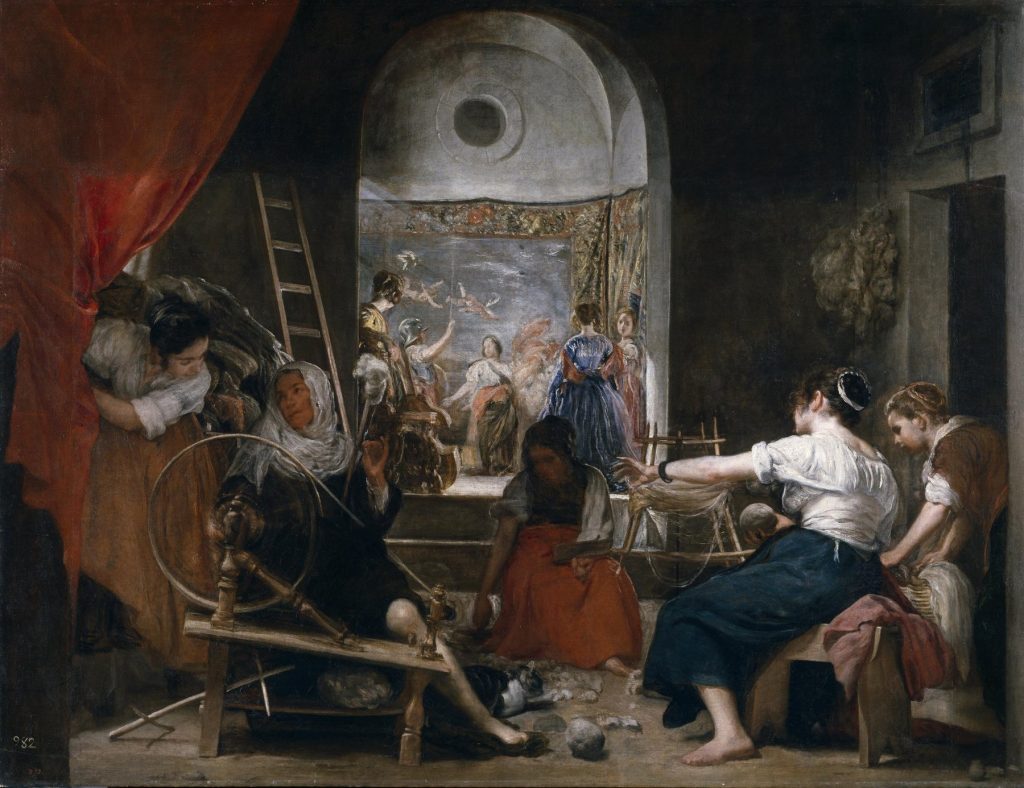
Cloth can conceal a body or carry an image that makes something visible. Arachne turns that double capacity upon the gods themselves.
Our words text and textile share a root in the Latin texere, to weave. Ovid makes the connection tangible: at the two looms, an old story is worked into the cloth, et vetus in tela deducitur argumentum. Athena and Arachne weave not only threads but rival accounts of the world. The cloth is not merely decorated. It is made to speak.14
Her scenes display disguises: the bull, the swan, the borrowed appearance of a husband. What hides divine identity from a figure inside the scene reveals divine conduct to the beholder outside it. The cloth exposes concealment by representing it.8
Athena also enters the episode in disguise. Her elderly appearance serves counsel, not sexual pursuit, so the acts should not be collapsed into a single moral category. Yet the repeated device gives the divine a structural advantage: a god can decide how to appear while the mortal must respond without always knowing whom she faces.5, 8
The two borders extend the tension. Athena’s olive encloses both a benefaction and exemplary punishments. Arachne’s ivy and flowers enclose images whose beauty cannot make their implications comfortable. Neither border supplies one secret meaning. Each helps the work hold together what its maker wishes the beholder to see.7, 8
The final transformation takes weaving from Arachne’s hands into her body. She no longer stands before a loom as a human maker. Her body produces the thread; her gift becomes the activity that defines the creature.10
This is preservation and reduction at once. Athena spares the life while taking away the human standing through which the artist demanded recognition. The punishment reaches descendants who never issued the challenge. Her command is even described through the language of a law of punishment, lex … poenae.10
The suspension imposed at the end also turns the image of Arachne’s crisis into an enduring condition. The goddess absorbs her attempted escape into the sentence. Yet she does not make Arachne incapable of creation.
The web is therefore both the mark of punishment and the persistence of a gift. Continuing to weave is not proof that the wrong has been repaired. It is evidence that the transformation has not abolished everything that made the woman herself.
Other stories bring out the loom’s double power. Sometimes the maker needs the cloth to reveal a truth. Sometimes she needs it to help conceal one.
Penelope: weaving to conceal
In the Odyssey, Penelope delays the suitors who want her to remarry while Odysseus remains absent. She promises to choose a husband after finishing a burial shroud for Laertes, her father-in-law. By day she weaves; by night she secretly undoes the work. What looks like progress toward submission conceals her refusal.15
The unfinished cloth protects her time and her choice. Arachne’s finished cloth does the opposite: it brings the concealed cost of divine power into view.
Penelope uses weaving to conceal her resistance. Arachne uses it to reveal what she resists.
Philomela: weaving to reveal
Philomela is Procne’s sister and the sister-in-law of Tereus, a Thracian king. Entrusted with bringing her to visit Procne, he rapes her, cuts out her tongue to prevent disclosure, and keeps her imprisoned. She weaves the account of her suffering into cloth and sends it to her sister. Procne reads it and brings her out of confinement.16
Both Philomela and Arachne reveal crimes through weaving, but their immediate struggles differ. Philomela needs her own injury to be known so that someone can reach her. Arachne challenges the demand to submit to an authority whose crimes she has represented. One seeks rescue from an injury; the other refuses to let reverence silence an accusation.
Their works also meet opposite responses. Procne recognizes the suffering and rescues the maker; Athena destroys the work and punishes the maker. Philomela’s rescue later gives way to a revenge that kills the innocent Itys, but the cloth first succeeds in reaching someone willing to hear her.17
Philomela’s revelation opens a way out of confinement. Arachne’s revelation brings punishment upon her.
Another spider: the world drawn from within
The spider does not carry a single verdict across traditions. In the Muṇḍaka Upaniṣad, its thread supplies an image for the world’s emergence from the imperishable:
As the spider sends forth and draws in its thread, as plants grow on the earth, as from every man hairs spring forth on the head and the body, thus does everything arise here from the Indestructible.
Muṇḍaka Upaniṣad 1.1.7, translated by F. Max Müller (1884). Read the passage18
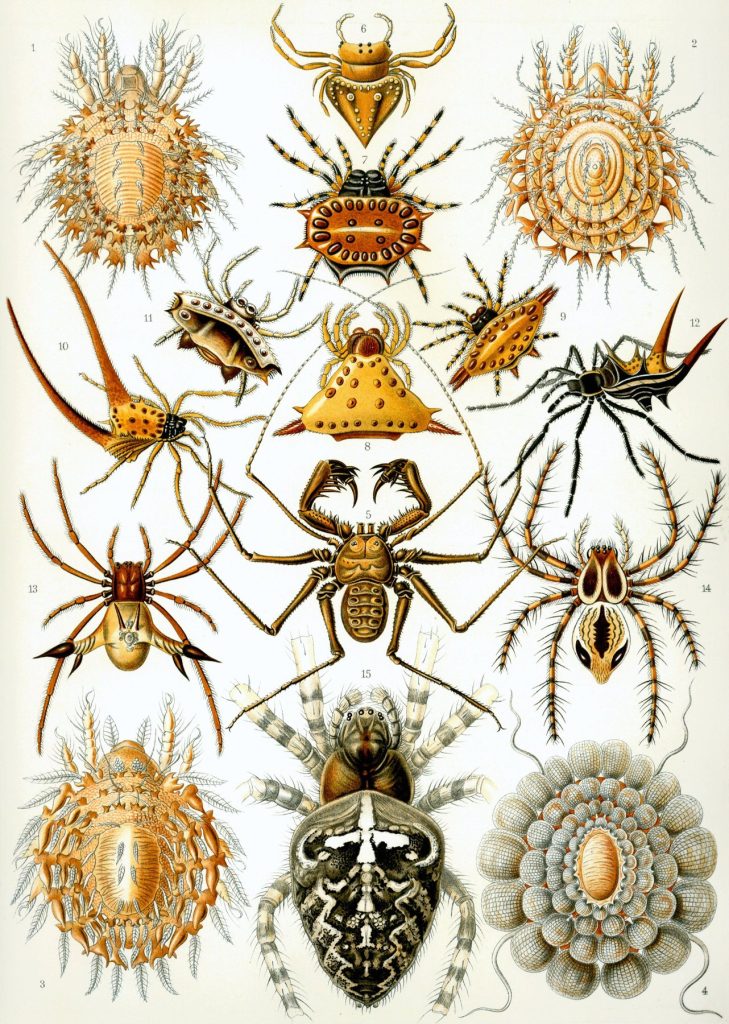
The surrounding passage identifies the Indestructible with Brahman, the source of beings. Here the spider illustrates origin and dependence, not punishment for pride.18
This is a contrast, not a claim of borrowing. Ovid turns a human artist into a spider through divine judgment; the Upaniṣad uses the spider’s activity to illuminate creative emergence. The comparison does not secretly make Arachne a deity. It prevents Athena’s sentence from exhausting what the creature can mean.
The web can be a confinement. It can also be the astonishing work of drawing a patterned world out of oneself.
Arachne’s transformed body holds both possibilities uneasily together.
What the goddess cannot tear
Athena’s tapestry had already shown mortals transformed into warnings. Arachne now becomes another such example: a creature whose fate can teach an audience not to challenge the gods. The punishment completes the argument Athena began at her loom.7, 10
But Ovid’s telling preserves the rival argument as well.
We can remember Arachne as the proud woman who would not yield. We can also remember that her work could not be faulted, that the poem associated it with heaven’s crimes, and that its success preceded its destruction. The warning against pride does not erase the accusation against power.9
The two feminine voices remain in tension. One asks what gratitude and restraint an ordered world requires. The other asks whose injuries have been made acceptable in the name of preserving that world. We do not have to deny the value of the olive tree to hear the second question.
Nor must Arachne become flawless before we allow her work to matter. Someone can be arrogant, reckless, and right about something that a superior does not wish to acknowledge. Her flaws do not make every punishment just. Athena’s gifts do not make every act of resistance ungrateful.
The goddess prevails over the woman’s fate. In the poem, however, she cannot wholly prevail over the woman’s meaning.
Before Athena tears the tapestry, Ovid has described it. We have seen Europa looking toward the land she has left, the disguised gods, the flowers woven through the ivy. The object disappears inside a story that preserves what it showed.8, 9
That is not enough to restore the artist’s human life. It is enough to prevent the destruction from being complete.
The goddess can tear the cloth.
Europa is still looking back.
Sources and textual notes
1. Ovid, Metamorphoses 6.7–25. Henry Thomas Riley, trans., The Metamorphoses of Ovid, translation first published 1851; the electronic text uses 1893 and 1899 reprints. Public-domain English text, Book VI. Latin text. Riley’s explanatory essays and synopsis are editorial commentary, not Ovid’s verses.
2. Ovid, Metamorphoses 6.50–52 and 6.70–128. Athena is called Jupiter’s daughter at 6.51; the two tapestries follow at 6.70–128. Latin text.
3. Liddell–Scott–Jones, s.v. ἀράχνη: “a spider, a spider’s web.” Perseus lexical entry. No speculative derivation of the Greek word from Hebrew is adopted here.
4. Ovid, Metamorphoses 6.1–6. Athena’s opening resolution is part of Ovid’s narrative, not a motive inferred only from the later assault. Latin text; Riley translation.
5. Ovid, Metamorphoses 6.26–52. The long quotation covers 6.26–49; the narrator’s criticism follows at 6.50–51. At 6.33 Riley’s “at my entreaty” is an interpretive rendering: the Latin says that the goddess will pardon the one who asks. Latin; Riley.
6. Ovid, Metamorphoses 6.53–69: the paired looms, skilled arms, rainbow, gold, and inherited subject matter. Latin text.
7. Ovid, Metamorphoses 6.70–102. The narration follows the Latin fretum at 6.77, seawater, rather than Riley’s “wild horse”; it likewise follows ciconia at 6.97, stork, rather than Riley’s “white crane” for Antigone. Neither discrepancy has been silently corrected within a quotation: the quoted selections avoid those sentences. This Antigone is Laomedon’s daughter, not the daughter of Oedipus. Latin text; Riley translation.
8. Ovid, Metamorphoses 6.103–128. The catalogue is quoted in full in Riley’s translation. Phoebus is Apollo; Liber is Dionysus/Bacchus; Saturn is Cronus. The encounters are not all identical, and not every female figure is mortal. Latin; Riley.
9. Ovid, Metamorphoses 6.129–135: non illud … carpere … possit opus, the work cannot be faulted; doluit successu, she grieved at the success; caelestia crimina, heavenly crimes or charges of wrongdoing; infelix and animosa, Arachne’s distress and proud or spirited character. “Unannounced victory” is this article’s interpretation of the sequence, not a formally recorded verdict. Riley’s introductory synopsis says Athena was “outdone,” but that synopsis is not itself a line of Ovid. Latin; Riley.
10. Ovid, Metamorphoses 6.135–145: miserata, taking pity; the command to live while hanging; the hereditary sentence; and the transformation. Lex … poenae occurs at 6.137. Latin; Riley.
11. Aeschylus, Eumenides 734–741; E. D. A. Morshead, trans. Public-domain translation, Internet Classics Archive. The reference gives the ancient passage encompassing Athena’s statement; the English verse lineation differs. Athena is explaining her position in Orestes’ matricide trial. This is a comparative passage from another work, not a biographical explanation imposed on every depiction of Athena.
12. Pseudo-Apollodorus, Library 3.1.1–3, translated by James George Frazer (1921): Europa’s Phoenician family, Zeus’ bull form and journey to Crete, the birth of Minos and his brothers, and Minos’ kingship. Public-domain primary text, ToposText. The article reads the relation between abduction and royal genealogy as a symbolic pattern of dynastic conquest.
13. Herodotus, Histories 1.1–5, especially 1.2, translated by George Rawlinson. In the account attributed to Persian narrators, Greeks abduct Europa from Phoenicia; the opening connects successive abductions with accusations between peoples. Herodotus records competing accounts rather than establishing all of them as historical fact. Primary text, Book I.
14. Merriam-Webster, s.v. text and textile: both derive ultimately from Latin texere, to weave, through different derivative forms. Ovid, Metamorphoses 6.69, et vetus in tela deducitur argumentum: Latin text. “An old story is worked into the cloth” is a prose rendering of the Latin here, not a quotation from Riley’s translation.
15. Homer, Odyssey 2.93–110 and 19.137–156: the shroud for Laertes and Penelope’s weaving and unweaving. Samuel Butler, trans., The Odyssey (1900). Public-domain text, Books II and XIX. The passage is paraphrased rather than quoted.
16. Ovid, Metamorphoses 6.438–510, 519–583, and 594–600: the sisters and Tereus, the visit, the rape and silencing, the woven disclosure, and Procne’s rescue of Philomela. The textile’s purple marks or signs, purpureas … notas, carry the account; the poem does not require a choice here between alphabetic writing and pictures. Latin; Riley translation.
17. Ovid, Metamorphoses 6.584–646: Procne’s reaction, Philomela’s release, and the killing of Itys. The comparison stops at a brief distinction between the reception of the two textiles; the complete tragedy is reserved for a separate article. Latin; Riley translation.
18. Muṇḍaka Upaniṣad 1.1.5–7, especially 1.1.7; F. Max Müller, trans., The Upanishads, Part II, Sacred Books of the East 15 (1884), p. 28. Public-domain translation. This is a comparison of symbolic uses, not a proposed historical borrowing.
Images: all artwork reproduced here is in the public domain or released as CC0, sourced through Wikimedia Commons from the Palace of Versailles, the Museo del Prado, the Isabella Stewart Gardner Museum, the Rijksmuseum, the Los Angeles County Museum of Art, and the Bibliothèque municipale de Rouen.