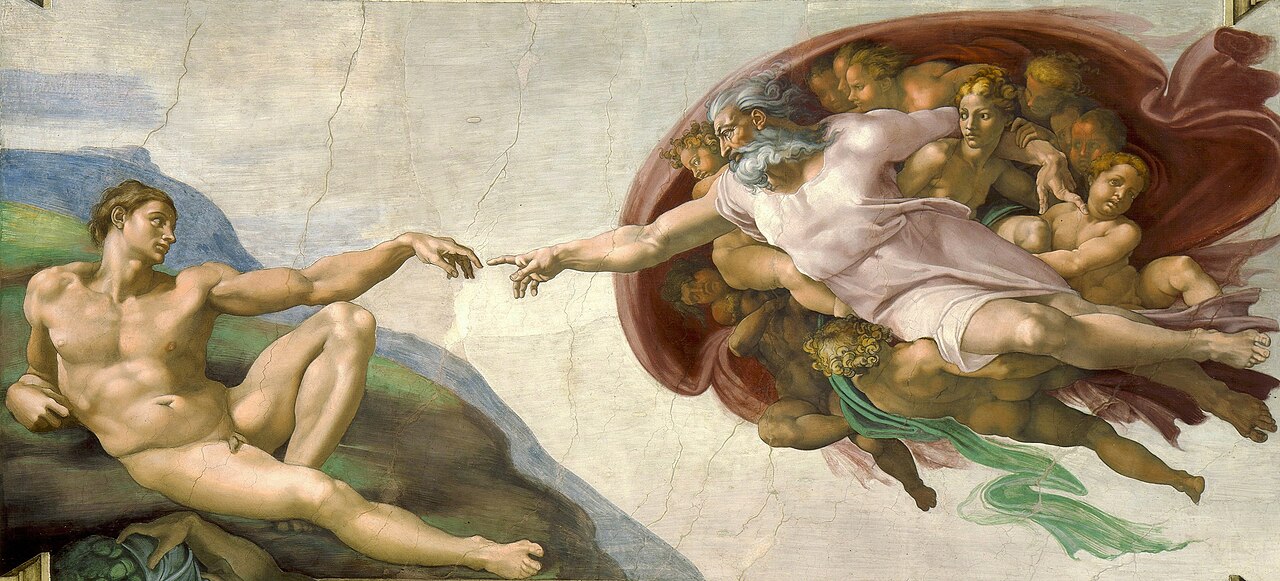
By the fourth chapter of Genesis the named population of the earth is four people, and one of them has just killed another. The murderer then says something that makes no sense in a world containing three people.
Behold, thou hast driven me out this day from the face of the earth; and from thy face shall I be hid; and I shall be a fugitive and a vagabond in the earth; and it shall come to pass, that every one that findeth me shall slay me. (Genesis 4:14)
Every one that findeth me. The only people alive are his mother, his father, and God, and God does not correct the fear. He takes a precaution against it.
And the LORD said unto him, Therefore whosoever slayeth Cain, vengeance shall be taken on him sevenfold. And the LORD set a mark upon Cain, lest any finding him should kill him. (Genesis 4:15)
A mark is a signal, and a signal needs somebody able to read it. Then Cain leaves, and within two verses he has both a wife and a city.
And Cain knew his wife; and she conceived, and bare Enoch: and he builded a city, and called the name of the city, after the name of his son, Enoch. (Genesis 4:17)
Cities are not built by one family. Every serious reader of Genesis for two thousand years has had to answer this, and the answers fall into three families. Cain married a sister. The story is allegory and the arithmetic does not apply. Or there were other people.
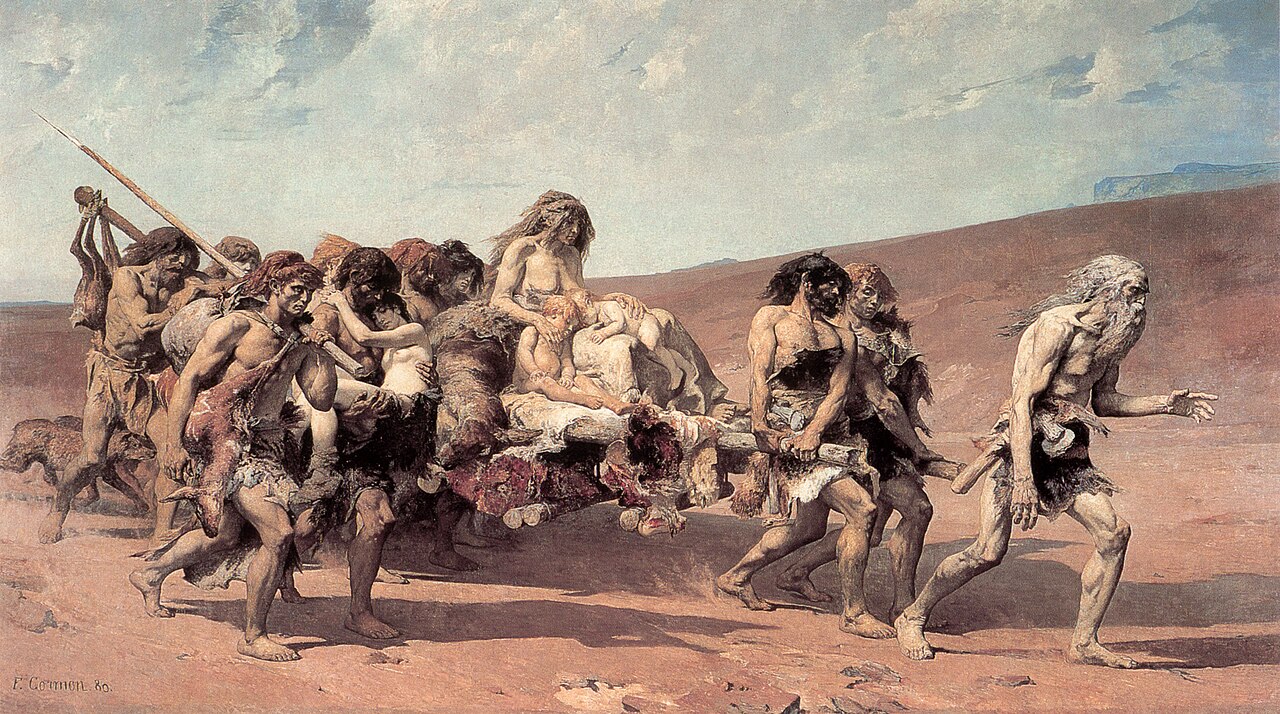
Two accounts, and why it matters which
The sister answer is possible. It requires Genesis to be silent about a great many daughters, and it leaves the mark pointless, since a warning sign aimed at unnamed strangers is a strange gift for a man whose only possible attackers are his own younger brothers. The allegory answer works but ends the conversation, because a text that means nothing in particular cannot be questioned about anything in particular.
The third answer is the one the book keeps making room for, and it starts before Cain, because Genesis tells the making of humanity twice and the two tellings do not agree.
In the first, God makes light, sky, land and plants, then the lights, then fish and birds, then land animals, and last of all people. They arrive as a population, plural in the sentence that introduces them, after everything else is finished.
So God created man in his own image, in the image of God created he him; male and female created he them. (Genesis 1:27)
In the second the order runs backwards. There is no rain and nobody to work the ground. One man is formed from dust before there is a garden for him. The garden is planted afterwards, for him. The animals come after that and are brought to him to be named. The woman comes last, because the man has been looked at and judged incomplete.
In chapter one the animals precede people by a day. In chapter two they are made after the man, expressly to cure his loneliness, and fail to cure it. Both cannot be a straight chronology of one week.
How Genesis came to hold two accounts is a large question with its own evidence, and it is not this article’s subject. What matters here is smaller and follows either way. Chapter two is not a summary of day six. It is a different scene, with a different shape, in which one man is singled out of a world that is already running.
Adam is not a name for most of the story
Adam, אָדָם, is an ordinary Hebrew noun meaning humankind, and through most of these chapters it carries the definite article: ha-adam, הָאָדָם, the man, or the human. Hebrew cannot attach a definite article to a personal name any more than English can say the Joel. Wherever the article is present, the text is not naming an individual. It is saying the human.
The noun is also a pun on the material. He is ha-adam taken from ha-adamah, הָאֲדָמָה, the ground. English has no clean equivalent, and the usual attempts, earthling from earth or human from humus, are approximations of a joke that runs through every verse about dust.
Then Genesis 5 declines to settle whether Adam is a person or a population.
Male and female created he them; and blessed them, and called their name Adam, in the day when they were created. (Genesis 5:2)
Their name. The Hebrew carries a plural suffix, shemam, their-name. God names a male and a female together, and the name he gives them is Adam. Two verses earlier the chapter calls itself the book of the generations of Adam, and two verses later it reports how old Adam was when he fathered Seth. Inside four verses the word is a couple, a book title, and a man.
That verse cuts both ways and should be quoted by anyone arguing either side. It refuses the reading in which Adam is only ever one individual, and it equally refuses the reading in which he is only ever a species.
One bad argument in this direction is worth refusing while we are here. Genesis 1:28 says replenish the earth, and generations of writers have taken replenish to mean refill, implying an earlier population cleared away. The Hebrew is mil’u, the plain verb fill, and God says exactly the same thing to Noah at Genesis 9:1. The word carried no sense of repetition in 1611 English either. That argument should be dropped by the people who like its conclusion.
The people made out of maize
Genesis is not the only scripture that makes humanity more than once.
The Popol Vuh, the K’iche’ Maya book of origins, has the gods attempt humanity in stages and fail twice. The first people are shaped from mud and cannot hold together. The second are carved from wood: they multiply and speak, but they have no minds and no memory of their makers, so they are destroyed in a flood, and as they die their own possessions turn on them. Their grinding stones complain that they were worked day and night with a sound of screeching, and say they will now grind the flesh of the people who used them. Their dogs bite them for never being fed. The survivors become the monkeys in the forest.
Only the third attempt works, and the material matters. The successful humanity is made from maize, a crop that does not exist without farmers to keep it. The failed one lived in the woods and ended as animals.
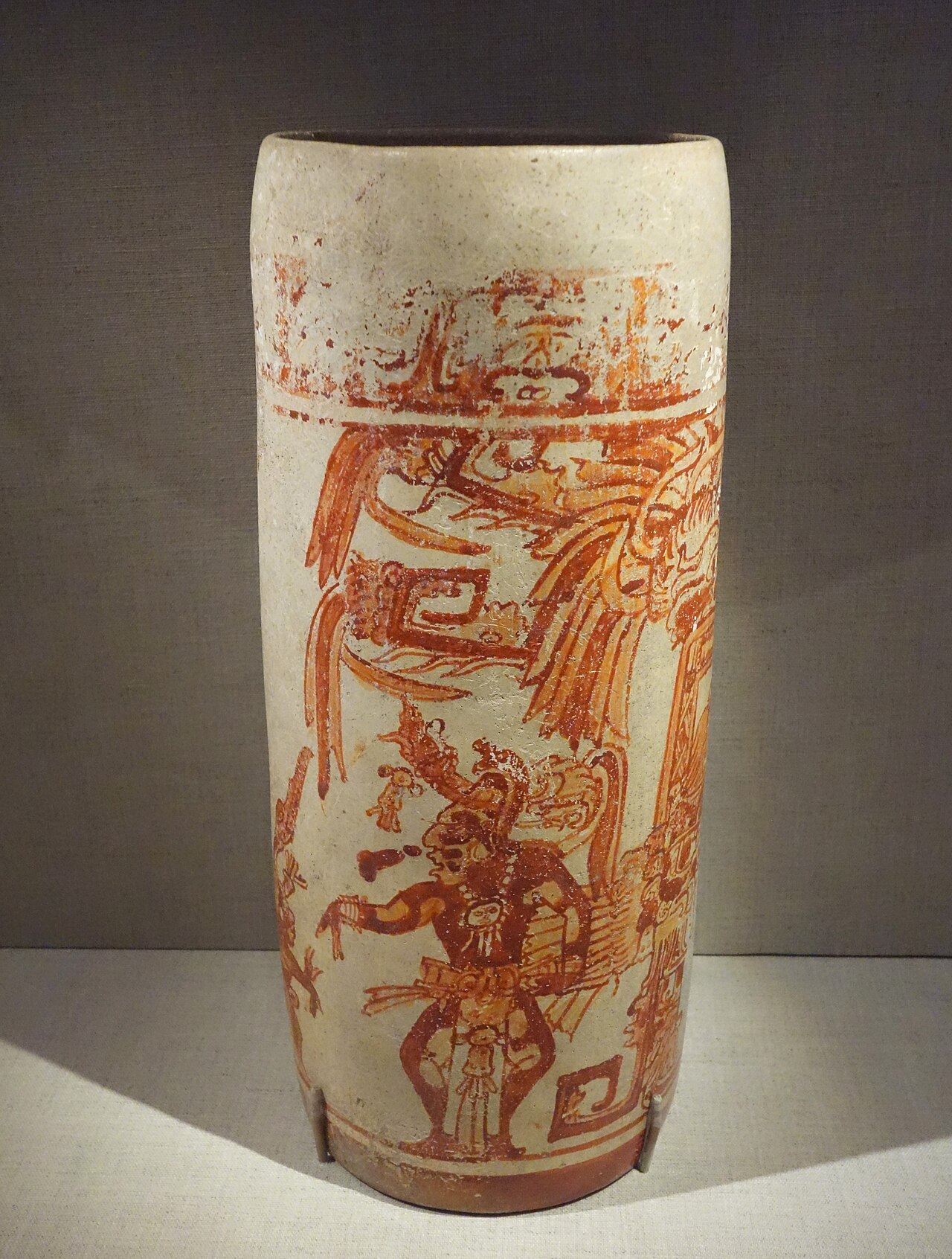
The type-scene: humanity made in more than one attempt. Set beside Genesis, the shared element is not a detail but a shape. An earlier humanity that did not work out, and a later one that the story is actually about. Hesiod does the same with metals, five races each made by the gods and none descended from the last. What differs is the verdict passed on the earlier attempts. The Popol Vuh destroys its failures and says so, and Hesiod’s races are removed one after another. Genesis does neither. It never says the people of chapter one were a failure, never destroys them, and never describes them as a lower kind. It simply stops following them. That restraint is the most important thing Genesis does in this whole argument, and the next section is about what happened when readers stopped observing it.
One caution about the Popol Vuh, since the parallel is close enough to be suspicious. It survives only in a manuscript written in Latin script after the Spanish conquest, and Lewis Spence, working on it in 1908, marked some of this material as showing possible Christian influence. The resemblance may be inheritance rather than independent witness, and nobody can currently settle it.
Where this reading came from, including the bad part
The observation that Genesis 1 and 2 do not match is ancient. The conclusion that other people were living outside the garden is not, and pretending otherwise would be dishonest.
Genesis Rabbah worried at Cain’s wife and answered with twin sisters born alongside the brothers. Augustine reached the same answer independently in the City of God. Philo of Alexandria, in the first century, did read Genesis 1 and Genesis 2 as two different men, a heavenly one and an earthly one, but his two men are two kinds of being rather than two populations, and he never suggests anybody was living beyond the garden wall. In antiquity the only figure who argued for people outside Eden was Julian the Apostate, and he was arguing against Christianity rather than within it.
The hinge is Isaac La Peyrère, whose Prae-Adamitae appeared in 1655. His argument turned on a verb. Romans 5:13 says that sin is not imputed where there is no law, and the Greek ellogeitai is an accounting term, to put to someone’s account. La Peyrère read Paul as saying that people had existed whose sins were not booked against them because the law had not yet been given, and concluded there had been humanity before Adam. He supported it with Cain’s wife, with Chinese and Chaldean chronologies longer than the biblical one, and with the inhabitants of the Americas and Greenland, who were difficult to fit into a genealogy from Noah.
Then the part that matters for anyone using this material now. La Peyrère’s own scheme made the Jews the descendants of Adam and the Gentiles the pre-Adamites, which made Europeans the pre-Adamite race. His book was burned in Paris, he was arrested in Brussels, and he recanted in 1658, converting to Catholicism and formally submitting the book to the Pope.
Within two centuries his argument had been turned inside out and pressed into the service of American slavery: Samuel Morton in 1839, Nott and Gliddon in 1854, the anonymous Ariel pamphlet of 1867, Alexander Winchell in 1878, Charles Carroll in 1900. Every one of them used a pre-Adamite argument to sort living human populations by ancestry.
There is a clean structural test that separates those versions from a chronological one, and it can be stated without any moralising. Can the proposal be used to sort the people in the room? Every racist version places contemporaneous populations on different lines of descent and requires the lines to stay separate. A claim about an event in the past makes no assertion about who alive today descends from whom. If a reading can be used to rank the living, it is the polygenist version, whichever way round it assigns the virtue. Turning the valuation upside down and making the other line the good one does not fix it, because the machine is the sorting and not the verdict.
Samuel Cartwright is the best illustration of why word evidence is not decoration. Defending slavery, he argued that the serpent of Eden was a human gardener rather than a snake, on the ground that nachash, נָחָשׁ, the Hebrew for serpent, carried a sense of becoming black. It does not. He had collided it with nechosheth, נְחֹשֶׁת, the word for bronze or copper, which shares consonants and means the colour of polished metal. An entire doctrine rested on a confusion between two Hebrew words, and a reader who knew the Hebrew could have taken it apart in a sentence.
The modern turn is the sharpest irony available. Genealogical descent, as distinct from genetic inheritance, spreads through a population astonishingly fast, and simulations published in Nature in 2004 put the most recent common ancestor of everyone alive around three and a half thousand years ago. On that arithmetic, separate ancestral lines among living people are not merely wrong, they are impossible. An idea weaponised for three centuries now delivers the conclusion that everyone alive descends from Adam. Scripture said it first and more briefly.
And hath made of one blood all nations of men for to dwell on all the face of the earth. (Acts 17:26)
Made of the same stuff
Everything above leaves one question, and Genesis answers it in a way that closes the door the polygenists went through.
If there were people outside the garden, were they a different kind of creature? The text says no, and it says so in its vocabulary rather than in a doctrine. Genesis 2:7 says the man became a living soul, and the Hebrew behind that phrase is nephesh chayyah, נֶפֶשׁ חַיָּה. The same two words describe the sea creatures at 1:20, the land animals at 1:24, and everything that creeps at 1:30, where the King James renders them living creature instead. One Hebrew phrase, two English translations, chosen by men who knew what a soul was supposed to mean.
Whatever separates the line of Adam from anyone outside the garden, then, it is not a different substance. The text does not hand Adam a soul and withhold one from his neighbours. It cannot, because it uses the same words for him that it uses for fish.
That matters more than it looks. If the difference were a substance, you could ask who has it, and sort people by the answer, which is exactly what three centuries of writers proceeded to do. Genesis gives no footing for it. Both groups are made by the same God, out of the same ground, and described with the same word.
What is different is not the material but the dealing. One line is formed by hand, breathed into directly, placed in a garden, and given a command with a penalty attached. That is the first prohibition in the Bible, and a creature cannot be guilty of breaking a rule it was never given. Whatever happened to Adam’s line happened in that relationship, not in their bones.
Narrowing, not sorting
The shape of Genesis is a funnel. A species is made and given the earth. The focus then closes to a line, to a garden, to one man who is spoken to and can answer back. It keeps closing for the rest of the book, from all nations to one family to one tribe, and the New Testament runs the movement in reverse, from one man back out to everybody.
Narrowing is not sorting, and Genesis shuts the door on sorting repeatedly. Eve is the mother of all living at 3:20. Genesis 5:1-2 heads Adam’s own genealogy with the creation formula from chapter one, tying the two accounts together rather than prising them apart. The people outside the garden are never called a lower kind, never given a different substance, and never destroyed. They are simply not who the story is following.
And there is one more thing they are never denied, which is the whole case in a single verse. Whoever the people of chapter one are, here is what the chapter says about them before Adam has been mentioned at all.
So God created man in his own image, in the image of God created he him; male and female created he them. (Genesis 1:27)
The image is given to the humanity of Genesis 1. Not to the garden, not to a line, not to a descendant. Anyone arguing that the people outside Eden were something less than human is arguing against the verse that made them, and the Bible returns to that verse later for a specific purpose. After the flood, when God prohibits killing, the reason he gives is not covenant membership or descent from Adam.
Whoso sheddeth man’s blood, by man shall his blood be shed: for in the image of God made he man. (Genesis 9:6)
The image is not a badge marking out who matters. It is the grounds on which nobody may be killed.
Then the sword, which is worth looking at because most readers remember it wrongly.
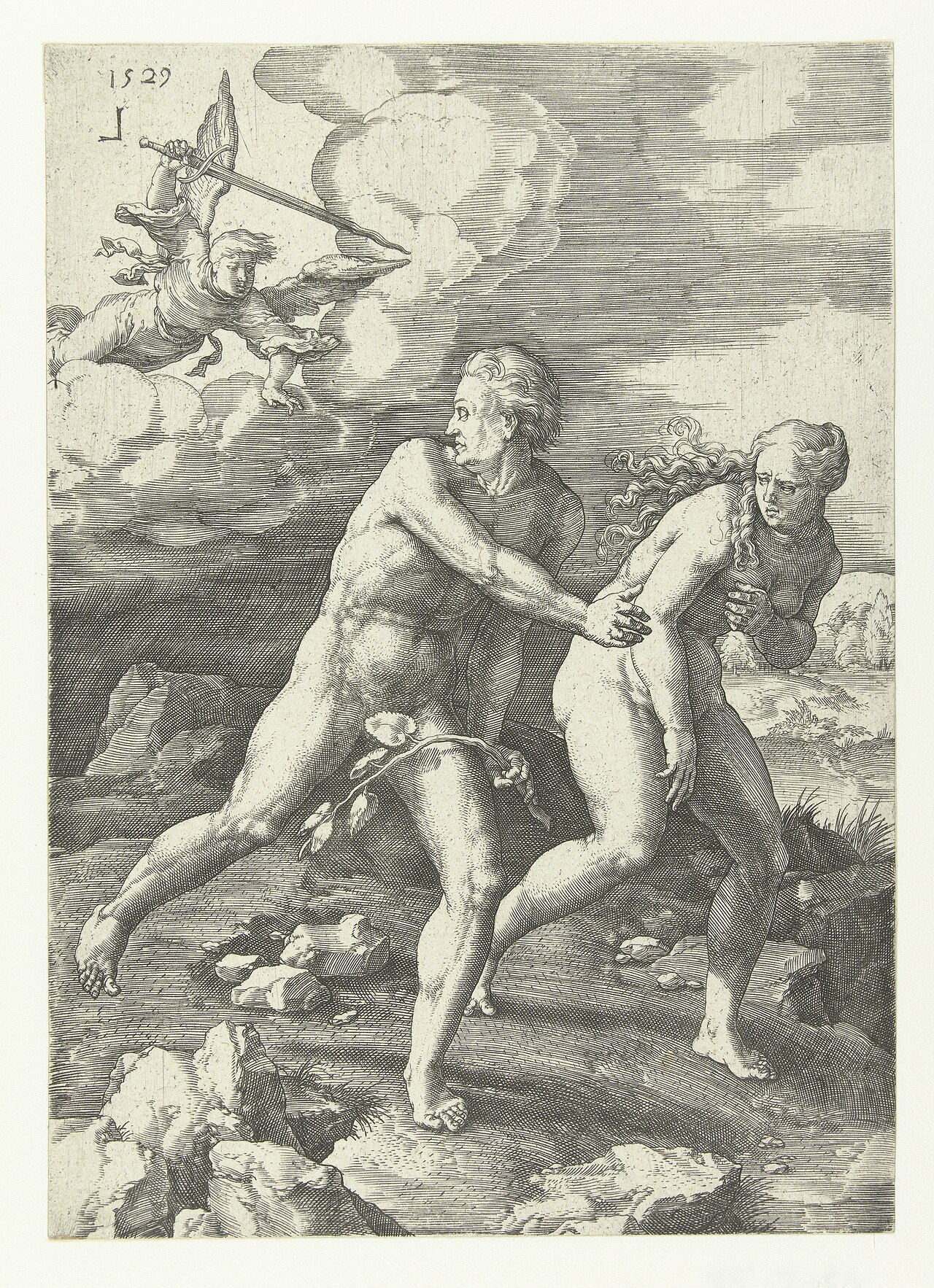
So he drove out the man; and he placed at the east of the garden of Eden Cherubims, and a flaming sword which turned every way, to keep the way of the tree of life. (Genesis 3:24)
Read what it is guarding. Not a border between peoples. Not a wall around a chosen family. The sword has one stated job, which is to keep the way of the tree of life, and the only thing it stands between is human beings and immortality. Genesis puts exactly one barrier in the world, and it does not run between one kind of person and another.
Notice which way the traffic goes. The guard is set at the east of the garden, and when Cain is driven out in the next chapter he goes east, to the land of Nod, where he finds a wife and builds a city. The sword does not fence the garden line off from everyone else. It pushes them out of the enclosure and into the common world, where the rest of humanity already is.
It would be reaching to say the sword exists in order to bring the two together, because the text gives it one purpose and that purpose is the tree. But the effect is not in doubt, because the text narrates it. The line that was set apart is returned to the general population within a chapter, and the merger is not tidy. The first recorded act of the garden line among the people outside it is a murder, and the second is the founding of a city. A rocky start, and a start all the same.
That is the ordinary condition of almost everybody in almost every book. It is worth saying plainly because the alternative has a history, and every version of this reading that turned vicious did so at precisely this point, by converting a story that follows one line into a claim about what the other lines are.
The text gives no warrant for the conversion. It gives the image to everybody, sets its one sword between people and a tree, and then drives the man it has been following out through the gate to live with everybody else.