Around five hundred years before Christ, a teacher in the small state of Lu gathered students around him and told them something that was not obvious at the time. A good society cannot be built by rearranging people. It has to be built out of good people, one at a time, starting with whoever is listening.
His name was Kong Qiu. Jesuit missionaries latinised it to Confucius, and that is the name he has carried in the West ever since. What survives of him is not a book he wrote. It is the Analects, a collection of remarks, questions and short exchanges that his students remembered and set down, some of them almost certainly long after he was dead. It reads like overheard conversation, because that is what it is.
A note on the words
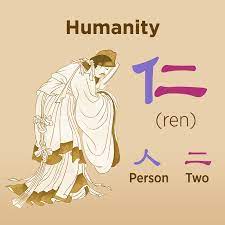
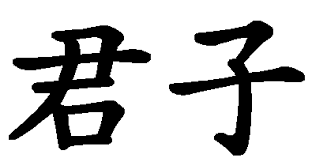
Two Chinese words carry most of the weight in this book, and everything below depends on them. The first is ren, 仁. The second is junzi, 君子.
James Legge, whose translation I quote throughout, renders ren as “virtue” or “perfect virtue”, and junzi as “the superior man”. Those were the natural English equivalents in 1861 and both have aged badly. Virtue in modern English has narrowed until it mostly means self-restraint, and ren is not restraint at all. It is what one person owes another for no reason except that the other is a person. I call it humaneness. “Superior man” now sounds like a boast, when junzi started life as a word for a man of good birth and was deliberately pulled by Confucius into a word for a man of good conduct. I call him the noble one, and his opposite, the xiaoren, 小人, the small man.
I have left Legge’s wording standing inside the quotations and used my own in the commentary, so that both are in front of you. Where he writes perfect virtue, read humaneness. Where he writes the superior man, read the noble one. The distance between the two is worth watching on its own, because it is the distance between two different centuries deciding what kind of thing Confucius was talking about.
All Analects passages below are from the translation by James Legge in The Chinese Classics (1861, revised 1893), which is in the public domain. Legge’s chapter numbers run slightly behind the modern ones, so both are given. Scripture is from the Authorised Version.
The thing is close, and nobody reaches it
Confucius is emphatic that humaneness is not far off and not difficult to locate.
Is virtue a thing remote? I wish to be virtuous, and lo! virtue is at hand.
Analects 7.30 (Legge VII.xxix), tr. James Legge
Then, a few books earlier, he says he has never met anyone who has it.
I have not seen a person who loved virtue, or one who hated what was not virtuous. He who loved virtue, would esteem nothing above it. He who hated what is not virtuous, would practise virtue in such a way that he would not allow anything that is not virtuous to approach his person. Is any one able for one day to apply his strength to virtue? I have not seen the case in which his strength would be insufficient.
Analects 4.6 (Legge IV.vi), tr. James Legge
Both things are meant. Nobody lacks the strength for a single day of it. Nobody he has met has managed it. Humaneness is within arm’s reach and permanently unachieved, and Confucius does not resolve that. He leaves the gap open and goes on teaching into it.
This is the first place where the comparison with Jesus becomes useful, and it is a likeness rather than a difference. Both teachers set a standard, and both refuse to claim they have met it. The gospels have Jesus turn aside the word good when it is offered to him: “Why callest thou me good? there is none good but one, that is, God” (Mark 10:18). Confucius does the same thing with the word sage. The difference is where the refusal points. Confucius deflects the title and leaves the space empty. Mark deflects it upward, toward someone who does hold it.
Respect the spirits and keep away from them
The sharpest difference in this whole comparison arrives early, in an answer Confucius gives to a student who asked him what wisdom is.
Fan Ch’ih asked what constituted wisdom. The Master said, ‘To give one’s self earnestly to the duties due to men, and, while respecting spiritual beings, to keep aloof from them, may be called wisdom.’ He asked about perfect virtue. The Master said, ‘The man of virtue makes the difficulty to be overcome his first business, and success only a subsequent consideration;—this may be called perfect virtue.’
Analects 6.22 (Legge VI.xx), tr. James Legge
Respect the spirits and keep your distance from them. It is not scepticism. Confucius sacrificed, observed the mourning rites and thought the ceremonies mattered enormously. He simply declines to build his teaching on anything he cannot see two men doing to each other. Heaven appears in the Analects, but it does not speak, it makes no promises, and it sends nobody.
Everything the gospels are about sits in exactly the territory Confucius is stepping around. The claim being made for Jesus is a claim about descent and about a father who does speak, who does send, and who acknowledges the son in the hearing of witnesses. Take that out and there is no gospel left. Take it out of the Analects and you lose almost nothing, because it was never load-bearing.
So the two bodies of teaching can agree closely about conduct while disagreeing completely about what a human being is for. That is worth holding onto, because most of what follows is agreement, and the agreement is more interesting once you know what it is sitting on top of.
The noble one and the small man
The junzi is defined almost entirely by contrast. Confucius rarely says what the noble one is. He says what the small man does instead.
What the superior man seeks, is in himself. What the mean man seeks, is in others.
Analects 15.21 (Legge XV.xx), tr. James Legge
The superior man is modest in his speech, but exceeds in his actions.
Analects 14.27 (Legge XIV.xxix), tr. James Legge
The test is always the same one. Does the man make demands of himself or of everyone around him, and is there more of him in his talk than in his conduct. Confucius returns to this obsessively, which suggests he was surrounded by men who failed it.
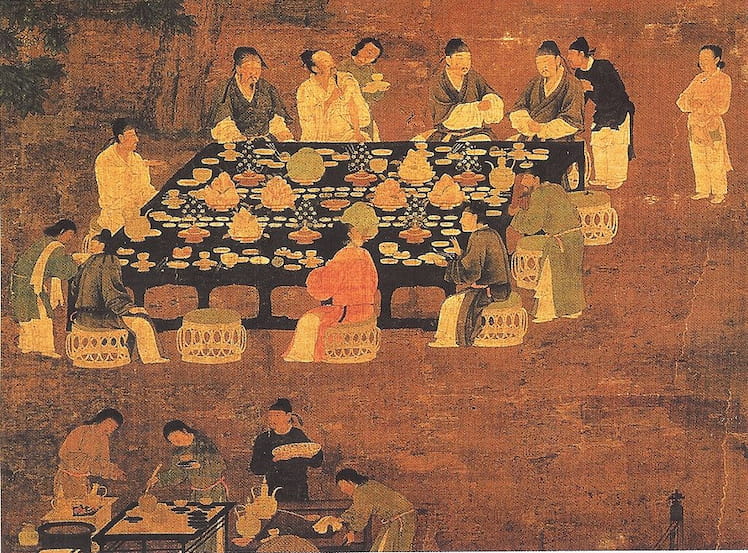
One line in this group is blunter than the rest, and it has an exact counterpart in Hebrew scripture.
I have not seen one who loves virtue as he loves beauty.
Analects 9.18 (Legge IX.xvii), tr. James Legge
But the LORD said unto Samuel, Look not on his countenance, or on the height of his stature; because I have refused him: for the LORD seeth not as man seeth; for man looketh on the outward appearance, but the LORD looketh on the heart.
1 Samuel 16:7, Authorised Version
The observation is the same and the authority behind it is not. Confucius is reporting what he has noticed about people over a long life. Samuel is being corrected mid-error by a voice telling him he is looking at the wrong thing. One is a wise man’s complaint. The other is an instruction from outside the scene, and it is the instruction that selects David, which is the line the Messiah is later said to come from.
He will not take the title
The sage and the man of perfect virtue;—how dare I rank myself with them? It may simply be said of me, that I strive to become such without satiety, and teach others without weariness.’ Kung-hsi Hwa said, ‘This is just what we, the disciples, cannot imitate you in.’
Analects 7.34 (Legge VII.xxxiii), tr. James Legge
Note what the student does with the refusal. Confucius says he is not a sage, only a man who keeps trying, and Kung-hsi Hwa answers that the trying is the part they cannot copy. The disclaimer gets turned into a further compliment before it has finished landing. That is how reputations are built around a teacher who is still alive.
The gospels contain the same manoeuvre and then break away from it. Jesus refuses the word good in Mark, but the same gospel has him accept titles that Confucius would not have entertained for a moment. Confucius is asked whether he is a sage and says no. Jesus is asked whether he is the Christ, the son of the Blessed, and the answer that follows is the reason he is executed. The structure of the scene is shared. The content of the answer is the whole distance between them.
Repay injury with justice
Here the two teachings do not merely differ. They are put the same question and give opposite answers.
Some one said, ‘What do you say concerning the principle that injury should be recompensed with kindness?’ The Master said, ‘With what then will you recompense kindness? Recompense injury with justice, and recompense kindness with kindness.’
Analects 14.34 (Legge XIV.xxxvi), tr. James Legge
Someone has put to Confucius a maxim that was already in circulation, repay a wrong with kindness, and he rejects it. His objection is not that it is too demanding. It is that it is incoherent. If kindness is what you owe the man who wronged you, you have nothing left to give the man who helped you, and the two men end up treated identically. Confucius will not let that happen, so he splits the response. Wrongs get uprightness, which is the honest and measured answer the case actually calls for. Kindness gets kindness.
The Sermon on the Mount takes the maxim Confucius threw out and raises it.
Ye have heard that it hath been said, An eye for an eye, and a tooth for a tooth: But I say unto you, That ye resist not evil: but whosoever shall smite thee on thy right cheek, turn to him the other also.
Matthew 5:38–39, Authorised Version
For if ye forgive men their trespasses, your heavenly Father will also forgive you: But if ye forgive not men their trespasses, neither will your Father forgive your trespasses.
Matthew 6:14–15, Authorised Version
Confucius measures the response against the act, because a proportionate world is a world men can live in. Matthew makes the response wildly disproportionate on purpose, and then supplies the reason Confucius could not have supplied. The forgiveness is not owed to the man who wronged you. It is owed upward, and it is the condition on which you are forgiven yourself. Once there is a father in the account, the arithmetic changes, and the objection Confucius raised no longer applies.
This is the clearest case in the article of what the comparison is actually for. The two men are not saying the same thing in different words. They are disagreeing, and the disagreement runs straight back to the divine father who is present in one account and deliberately kept at a distance in the other.
The Way comes before food
The object of the superior man is truth. Food is not his object. There is plowing;—even in that there is sometimes want. So with learning;—emolument may be found in it. The superior man is anxious lest he should not get truth; he is not anxious lest poverty should come upon him.
Analects 15.32 (Legge XV.xxxi), tr. James Legge
The argument is practical rather than pious. Farming is the sensible choice and farmers still starve in a bad year. Learning is the impractical choice and scholars are sometimes paid. Since neither path guarantees a meal, the guarantee is not what should decide it, and a man may as well choose the one worth having.
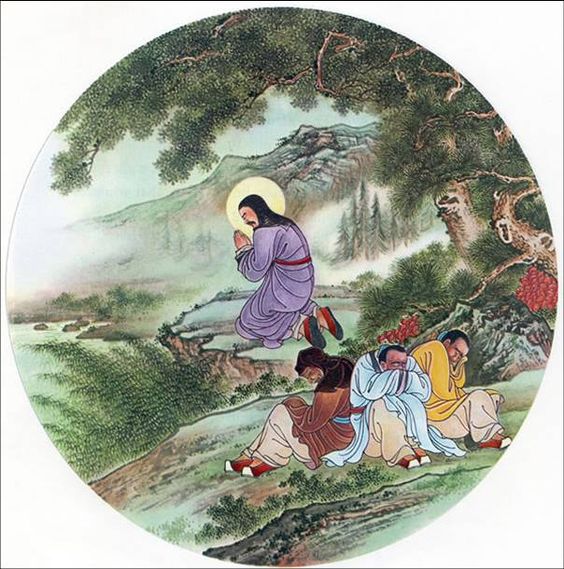
Jesus is given the same choice in the desert, under worse conditions, and answers along the same line.
But he answered and said, It is written, Man shall not live by bread alone, but by every word that proceedeth out of the mouth of God.
Matthew 4:4, Authorised Version
This is the closest the two come to saying one thing. Both put the moral path above the meal, and both are talking about real hunger rather than a figure of speech. The tell is in the second half of the sentence. Confucius stops at the Way. Matthew names what a man lives by instead of bread, and it is a word coming out of a mouth, which brings us back to the speaking father that the Analects does without.
The man who could assist everyone
The most important passage in this article is one where a student overreaches and Confucius stops him.
Tsze-kung said, ‘Suppose the case of a man extensively conferring benefits on the people, and able to assist all, what would you say of him? Might he be called perfectly virtuous?’ The Master said, ‘Why speak only of virtue in connexion with him? Must he not have the qualities of a sage? Even Yao and Shun were still solicitous about this. Now the man of perfect virtue, wishing to be established himself, seeks also to establish others; wishing to be enlarged himself, he seeks also to enlarge others. To be able to judge of others by what is nigh in ourselves;—this may be called the art of virtue.’
Analects 6.30 (Legge VI.xxviii), tr. James Legge
Tsze-kung describes a man who could relieve everybody, and asks whether that counts as humaneness. Confucius tells him he has described something above it. That is a sage, and the ancient sage kings Yao and Shun worried about falling short of it, which is Confucius saying that the best rulers in memory did not manage what the student has casually sketched.
Then he pulls the standard back down to a size a man can carry. Want your own footing, and give others theirs. Judge what another person needs by what is near to hand in yourself. Humaneness, in the end, is an act of imagination performed on the person in front of you.
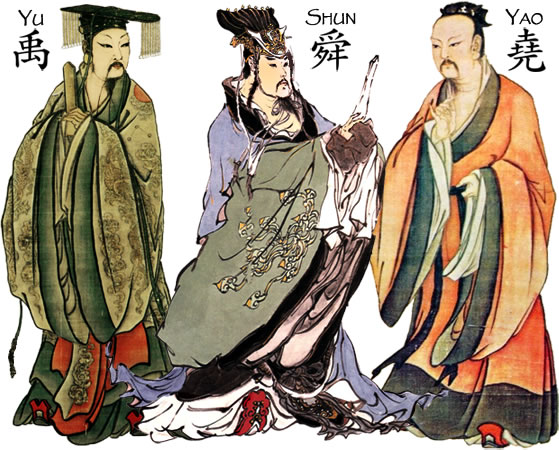
What makes this the hinge of the comparison is the shape of the vacancy. Confucius has marked out a position that he says is real, higher than humaneness, and occupied by nobody he can point to. Yao and Shun are safely in the distant past and did not quite fill it. Nothing in the Analects suggests anyone will.
The prophets of Israel leave a vacancy of the same shape and then say it will be filled.
And the Redeemer shall come to Zion, and unto them that turn from transgression in Jacob, saith the LORD.
Isaiah 59:20, Authorised Version
Two traditions arrive at the same conclusion about ordinary people, that the standard is out of reach, and then go in opposite directions with it. Confucius treats the gap as permanent and tells his students to keep walking toward it. Isaiah treats it as an announcement, and someone is coming to close it. The gospel writers take that announcement and attach a name to it.

Fine words and the men who held the office
Fine words and an insinuating appearance are seldom associated with true virtue.
Analects 1.3 (Legge I.iii), tr. James Legge
Confucius distrusts fluency. A man who can produce the right sentiment on demand has probably practised the sentiment rather than the thing, and the polish is evidence against him.
The gospels level the same charge, and it is worth being accurate about who receives it. The Temple in Jerusalem was run by the chief priests and the Sadducean aristocracy, who held the office and the revenue. The Pharisees were something else, a lay movement of teachers with a reputation for scrupulous observance and considerable standing with ordinary people, which is precisely what makes them the target. Matthew is not attacking men for holding power they were unfit for. He is attacking men who had the reputation without the substance, which is the same complaint Confucius makes about fine words.
Ye hypocrites, well did Esaias prophesy of you, saying, This people draweth nigh unto me with their mouth, and honoureth me with their lips; but their heart is far from me.
Matthew 15:7–8, Authorised Version
For they bind heavy burdens and grievous to be borne, and lay them on men’s shoulders; but they themselves will not move them with one of their fingers.
Matthew 23:4, Authorised Version
Set that beside the test Confucius kept applying. The noble one makes demands on himself, the small man makes demands on others. Matthew 23:4 is that sentence turned into a picture. The loads go onto other men’s shoulders and the men who tied them will not lift a finger. Two traditions with no contact between them produced the same diagnosis of religious authority, which suggests the failure is a standing feature of the office rather than a local scandal.
For I say unto you, That except your righteousness shall exceed the righteousness of the scribes and Pharisees, ye shall in no case enter into the kingdom of heaven.
Matthew 5:20, Authorised Version

Giving up the life to keep the virtue whole
The determined scholar and the man of virtue will not seek to live at the expense of injuring their virtue. They will even sacrifice their lives to preserve their virtue complete.
Analects 15.9 (Legge XV.viii), tr. James Legge
This is as far as Confucius goes, and it is further than people expect from him. There is a point at which staying alive costs more than it is worth, and a man who has understood humaneness will pay with his life rather than damage it. He does not dress this up. No reward is mentioned, no vindication afterwards, nothing beyond the thing itself being kept whole.
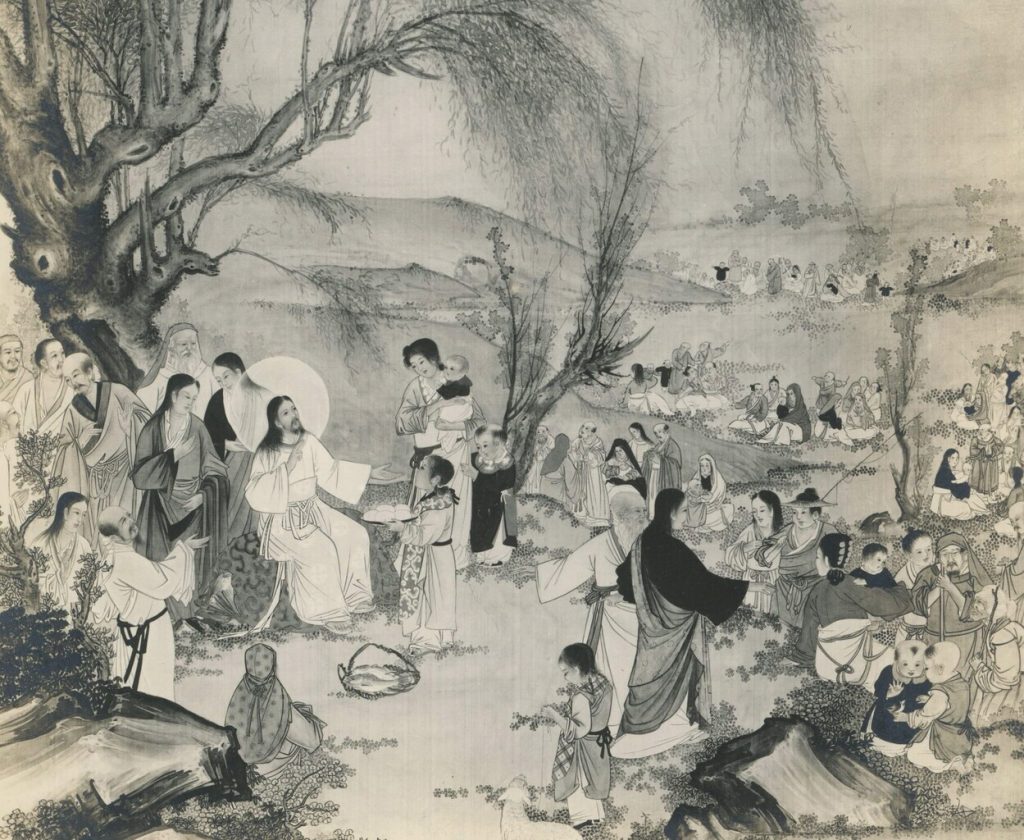
The Passion is the nearest thing in the gospels, and John states the principle in almost the same terms: “Greater love hath no man than this, that a man lay down his life for his friends” (John 15:13).
Then the two accounts part, and they part on the point this site keeps returning to. The Analects death has no audience and no sequel. It is a private transaction between a man and his own integrity, and when it is over he is dead and the virtue is intact. The crucifixion is staged in public, addressed to a father, and answered. Something happens afterwards. The whole weight of the story rests on the answer, and the Analects has no mechanism for one, because Confucius told Fan Ch’ih to respect the spirits and keep away from them.
So the sacrifice is genuinely shared and the meaning of it is not. A Confucian death for the sake of humaneness proves that the man was what he claimed. A messianic death is offered as proof of something about the father who sent him. One closes a life. The other opens a claim.
Four things, and none of them enough alone
When a man’s knowledge is sufficient to attain, and his virtue is not sufficient to enable him to hold, whatever he may have gained, he will lose again. When his knowledge is sufficient to attain, and he has virtue enough to hold fast, if he cannot govern with dignity, the people will not respect him. When his knowledge is sufficient to attain, and he has virtue enough to hold fast; when he governs also with dignity, yet if he try to move the people contrary to the rules of propriety:—full excellence is not reached.
Analects 15.33 (Legge XV.xxxii), tr. James Legge
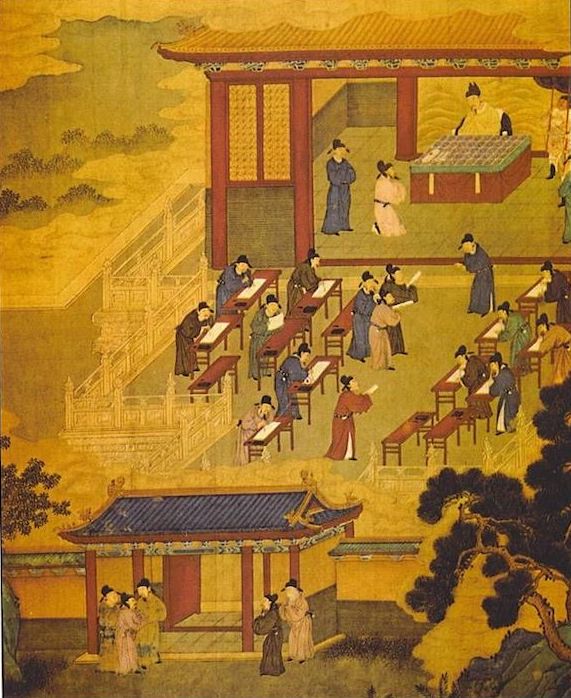
Four things are needed and they have to arrive together. Knowledge enough to win it. Humaneness enough to hold it. Dignity enough to be respected. And ritual propriety, which is the part modern readers skip and Confucius would not, because it is the difference between leading men and driving them.
It is a specification for a figure who does not exist. Confucius builds these lists the way the prophets build theirs, by describing someone complete and leaving the space unfilled, and this is the structural likeness that makes the two traditions worth reading against each other. Both produce an outline of a man nobody has been. Only one of them says he is coming.
What the comparison yields, in the end, is not a hidden connection between Confucius and Jesus. There is no evidence of one and the article does not need one. What it yields is a control. Here is a tradition that worked out an ethic of humaneness, identified a standard above it that nobody had reached, described the man who would meet that standard, and then declined to say that he would ever arrive. Set the gospel claim beside that and you can see exactly which part of it is moral teaching, which part is shared with the rest of the ancient world, and which part is the claim about a father and a son that nothing in the Analects would have known what to do with.