The prophet who drew Israel’s border is sent to save the city that will erase it
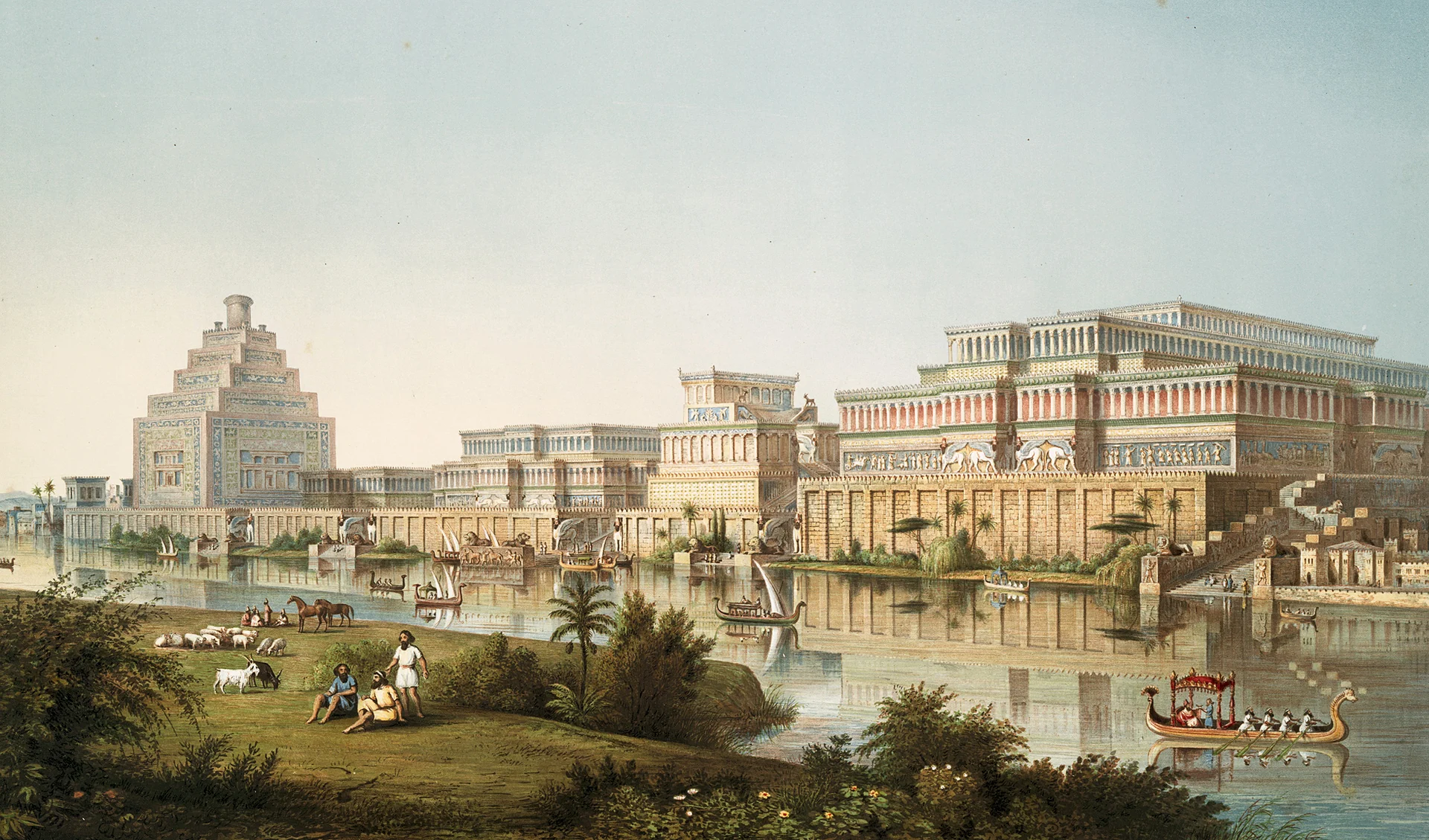
Opening illustration: The Palaces of Nimroud Restored, after a sketch by James Fergusson, from A. H. Layard’s Monuments of Nineveh, second series, 1853: an Assyrian royal city on the Tigris as its first excavator imagined it. Public domain.
The book of Jonah opens with an order to a man it does not introduce.
Now the word of the LORD came unto Jonah the son of Amittai, saying, Arise, go to Nineveh, that great city, and cry against it; for their wickedness is come up before me. But Jonah rose up to flee unto Tarshish from the presence of the LORD, and went down to Joppa; and he found a ship going to Tarshish: so he paid the fare thereof, and went down into it, to go with them unto Tarshish from the presence of the LORD.
— Jonah 1:1–3, King James Version.1
The Prophet of the Border
One other book knows him.
He restored the coast of Israel from the entering of Hamath unto the sea of the plain, according to the word of the LORD God of Israel, which he spake by the hand of his servant Jonah, the son of Amittai, the prophet, which was of Gath-hepher.
— 2 Kings 14:25, King James Version.2
It is the same name and the same father. Under Jeroboam II the northern kingdom took back the land it had lost, and the historian credits the recovery to a word spoken by Jonah. Before he was the prophet sent to a foreign capital, he was the prophet of Israel’s restored frontier.
Yonah, יוֹנָה, is the ordinary Hebrew word for a dove. Amittai, אֲמִתַּי, is built on emet, אֱמֶת, “truth.” The dove, son of truth, is ordered east to Nineveh, a royal city of Assyria on the Tigris, across the river from modern Mosul. What has come up before God from it is raʿatam, רָעָתָם, “their wickedness,” and that word, raʿah, will follow Jonah through the book.2
Down to Joppa
But the LORD sent out a great wind into the sea, and there was a mighty tempest in the sea, so that the ship was like to be broken. Then the mariners were afraid, and cried every man unto his god, and cast forth the wares that were in the ship into the sea, to lighten it of them. But Jonah was gone down into the sides of the ship; and he lay, and was fast asleep. So the shipmaster came to him, and said unto him, What meanest thou, O sleeper? arise, call upon thy God, if so be that God will think upon us, that we perish not.
— Jonah 1:4–6, King James Version.1
The Hebrew counts his steps. He va-yered Yafo, וַיֵּרֶד יָפוֹ, “went down to Joppa,” then va-yered bah, וַיֵּרֶד בָּהּ, “went down into” the ship, then yarad, יָרַד, “was gone down” into its hold, and the verb for his sleep, va-yeradam, וַיֵּרָדַם, is made to sound like a fourth descent. Abraham went when he was called. Jonah goes the other way, by sea, toward Tarshish at the far end of the known world.3
A psalm gives the wish behind the voyage: “Oh that I had wings like a dove! for then would I fly away, and be at rest,” safe “from the windy storm and tempest.” The prophet named Dove flies, and the storm is what he finds. Noah’s dove, as the Noah article tells, came back to the ark because she “found no rest for the sole of her foot.”3
The sailors do what experienced men do. Each calls on his own god, and they throw the cargo overboard. The real cargo stays below, asleep. The Greek Bible adds that he snored: ekatheude kai errenche, ἐκάθευδε καὶ ἔρρεγχε. A foreign captain has to wake the prophet of God and tell him to pray.3
Mark sets Jesus in the same place. A great storm fills the boat, and he is “in the hinder part of the ship, asleep on a pillow.” The disciples wake him with the captain’s word: “Master, carest thou not that we perish?” The captain says ve-lo noved, וְלֹא נֹאבֵד, “that we perish not,” which the Greek Bible turns as apolōmetha, ἀπολώμεθα, and Mark has apollymetha, ἀπολλύμεθα. Jesus stands up and stills the sea with a sentence. Jonah’s storm will stop only when he is in the water.4
The Lot Falls on Jonah
And they said every one to his fellow, Come, and let us cast lots, that we may know for whose cause this evil is upon us. So they cast lots, and the lot fell upon Jonah. Then said they unto him, Tell us, we pray thee, for whose cause this evil is upon us; What is thine occupation? and whence comest thou? what is thy country? and of what people art thou? And he said unto them, I am an Hebrew; and I fear the LORD, the God of heaven, which hath made the sea and the dry land. Then were the men exceedingly afraid, and said unto him, Why hast thou done this? For the men knew that he fled from the presence of the LORD, because he had told them.
— Jonah 1:7–10, King James Version.1
The lot finds him, and the crew does not condemn him. They ask who he is. His answer carries its own irony: he serves the God who made the sea, and the sea is the road he took to get away from him. The sailors are now more afraid of Jonah’s God than Jonah is.
Take Me Up, and Cast Me Forth
Then said they unto him, What shall we do unto thee, that the sea may be calm unto us? for the sea wrought, and was tempestuous. And he said unto them, Take me up, and cast me forth into the sea; so shall the sea be calm unto you: for I know that for my sake this great tempest is upon you. Nevertheless the men rowed hard to bring it to the land; but they could not: for the sea wrought, and was tempestuous against them. Wherefore they cried unto the LORD, and said, We beseech thee, O LORD, we beseech thee, let us not perish for this man’s life, and lay not upon us innocent blood: for thou, O LORD, hast done as it pleased thee. So they took up Jonah, and cast him forth into the sea: and the sea ceased from her raging. Then the men feared the LORD exceedingly, and offered a sacrifice unto the LORD, and made vows.
— Jonah 1:11–16, King James Version.1
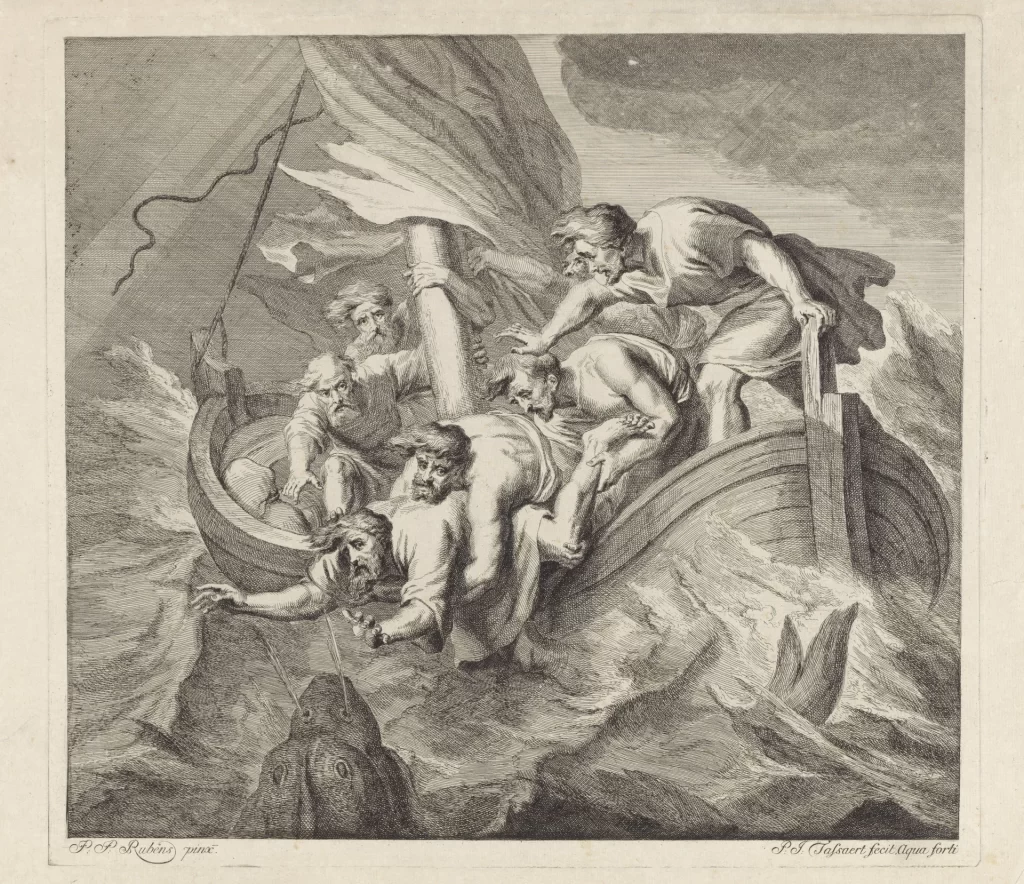
Jonah offers himself. The crew did not choose him, and before they agree they try to row him to shore. Men who were calling on their own gods a few verses earlier now pray to his by name and are afraid of shedding innocent blood. The chapter began with foreigners crying to false gods and ends with them making vows to the LORD. The pagans have shown more faith than the prophet.
The Gospel of John has a high priest make the same calculation for another man. “It is expedient for us,” Caiaphas says, “that one man should die for the people, and that the whole nation perish not.” The sailors had prayed, “let us not perish for this man’s life.” In both scenes one life goes over the side so that the rest are kept. Jonah proposes it himself and the crew resists. Caiaphas proposes it for someone else and the council agrees. Jonah goes into the water to end a storm he caused, and the man Caiaphas means has caused none.5
Three Days in the Fish
Now the LORD had prepared a great fish to swallow up Jonah. And Jonah was in the belly of the fish three days and three nights.
Then Jonah prayed unto the LORD his God out of the fish’s belly, And said, I cried by reason of mine affliction unto the LORD, and he heard me; out of the belly of hell cried I, and thou heardest my voice. For thou hadst cast me into the deep, in the midst of the seas; and the floods compassed me about: all thy billows and thy waves passed over me. Then I said, I am cast out of thy sight; yet I will look again toward thy holy temple. The waters compassed me about, even to the soul: the depth closed me round about, the weeds were wrapped about my head. I went down to the bottoms of the mountains; the earth with her bars was about me for ever: yet hast thou brought up my life from corruption, O LORD my God. When my soul fainted within me I remembered the LORD: and my prayer came in unto thee, into thine holy temple. They that observe lying vanities forsake their own mercy. But I will sacrifice unto thee with the voice of thanksgiving; I will pay that that I have vowed. Salvation is of the LORD. And the LORD spake unto the fish, and it vomited out Jonah upon the dry land.
— Jonah 1:17–2:10, King James Version.1
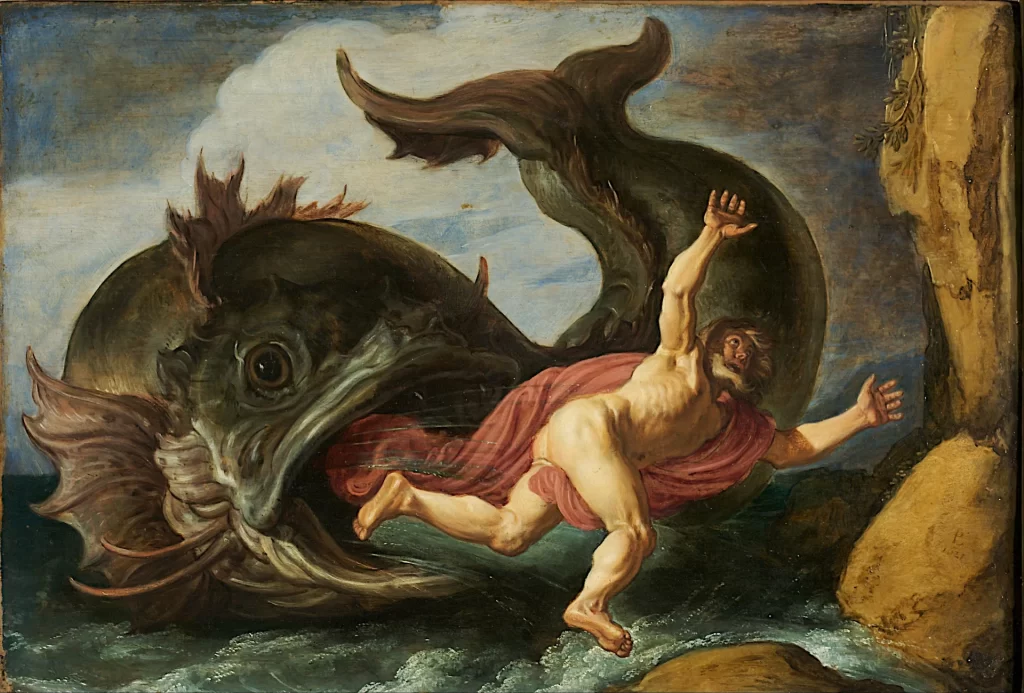
“Prepared” is va-yeman, וַיְמַן, “appointed.” The sea monsters of the neighbours, Yam in Canaan and Tiamat in Babylon, are rival powers that a god has to kill, as the Serpent Slayers article tells. This one is on an errand. The same verb will appoint a plant, a worm and a wind before the book is over.6
“The belly of hell” is beten Sheʾol, בֶּטֶן שְׁאוֹל, the belly of the land of the dead. The descents end here: yaradti, יָרַדְתִּי, “I went down to the bottoms of the mountains,” with the seaweed round his head like a shroud and the bars of the earth shut behind him. From there he prays toward the temple, and for the first time in the book he stops arguing. He gives thanks and promises a sacrifice. He does not mention his flight, and he does not mention Nineveh.6
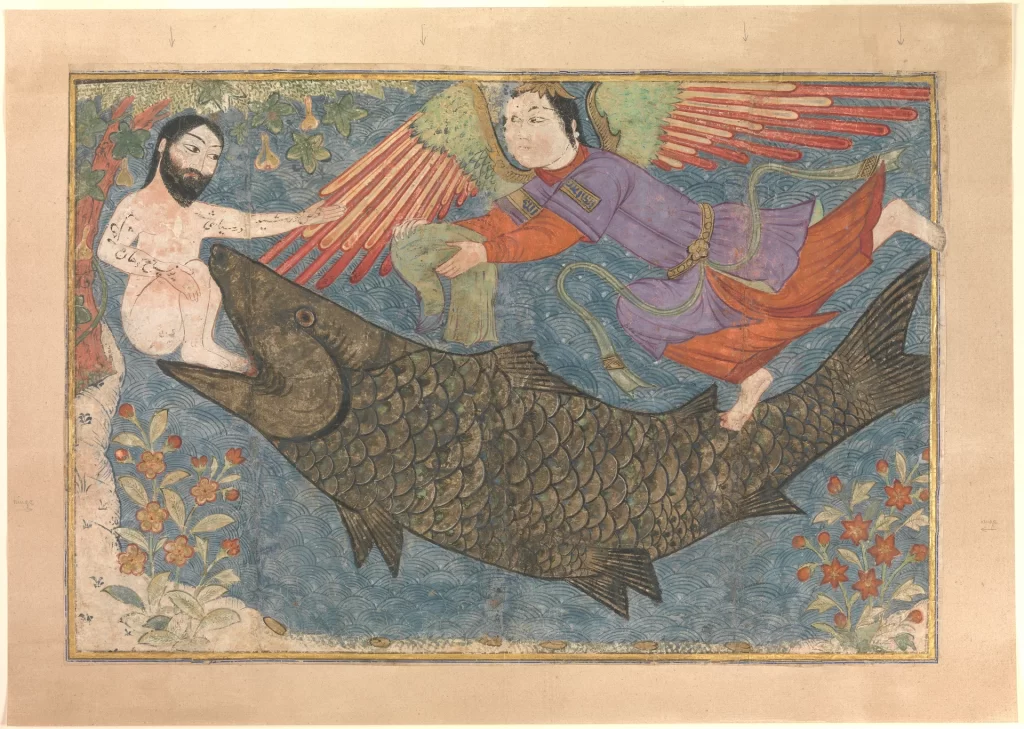
The Qur’an supplies the sentence that is missing. Its Jonah cries out in the darkness, “There is no God save Thee. Be Thou Glorified! Lo! I have been a wrong-doer.” It also moves the plant of the last chapter to this shore: “We cast him on a desert shore while he was sick; And We caused a tree of gourd to grow above him.” There the gourd is a sickbed. In the Hebrew book it will be an argument.7
Nineveh was a city of Ishtar, the goddess the Sumerians called Inanna, and her story has the same count. Inanna goes down to the underworld, is killed and hung on a hook, and “after three days and three nights had passed” her servant raises the alarm, as the Inanna’s Descent article tells. She comes back, and the underworld demands a substitute, so her husband Dumuzi is taken in her place. The name of Nineveh itself was written in cuneiform with the sign of a fish inside a house, and the prophet who would not enter that city is shut inside a fish.8
Jesus makes the three days his own sign: “For as Jonas was three days and three nights in the whale’s belly; so shall the Son of man be three days and three nights in the heart of the earth.” Matthew’s Greek copies the Greek Jonah word for word, en tē koilia tou kētous treis hēmeras kai treis nyktas, ἐν τῇ κοιλίᾳ τοῦ κήτους τρεῖς ἡμέρας καὶ τρεῖς νύκτας. The three stories settle the account in three ways. Inanna returns, and someone else is sent down for her. Jonah is released and nobody is exchanged for him. In the Gospels the one who goes down is himself the substitute.9
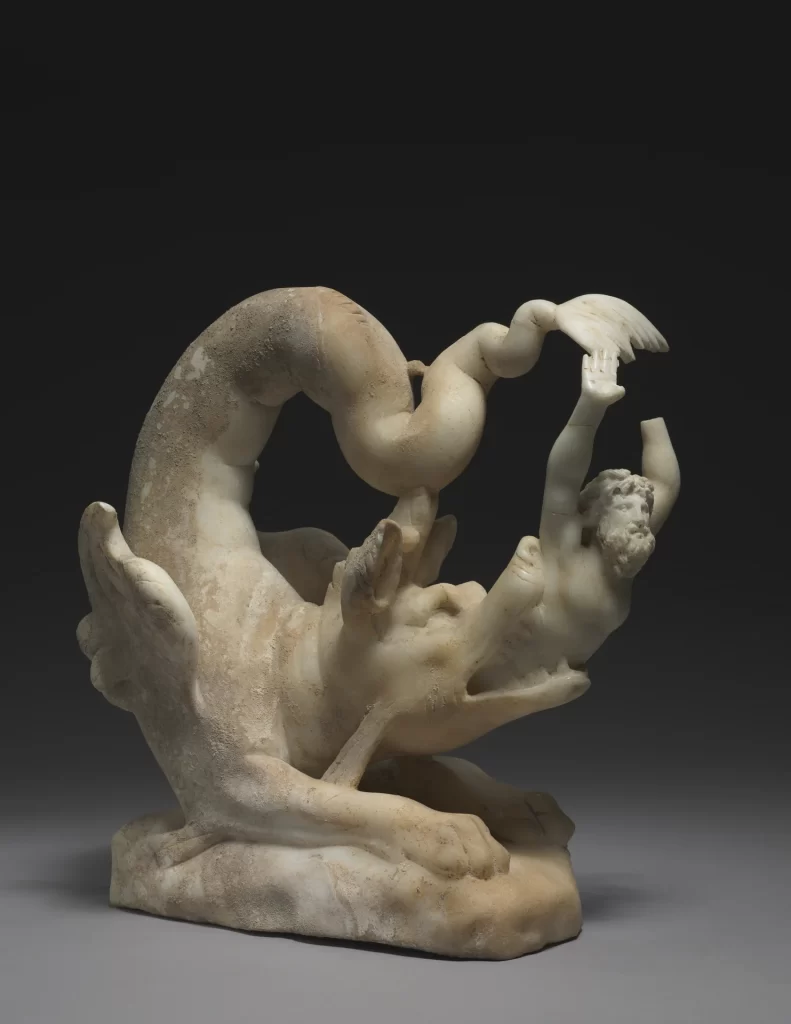
The fish cannot keep him. Dry land is the opposite of the abyss, and this is the rebirth the book has been descending toward. What it has changed in him is tested next.
Yet Forty Days
And the word of the LORD came unto Jonah the second time, saying, Arise, go unto Nineveh, that great city, and preach unto it the preaching that I bid thee. So Jonah arose, and went unto Nineveh, according to the word of the LORD. Now Nineveh was an exceeding great city of three days’ journey. And Jonah began to enter into the city a day’s journey, and he cried, and said, Yet forty days, and Nineveh shall be overthrown.
So the people of Nineveh believed God, and proclaimed a fast, and put on sackcloth, from the greatest of them even to the least of them. For word came unto the king of Nineveh, and he arose from his throne, and he laid his robe from him, and covered him with sackcloth, and sat in ashes. And he caused it to be proclaimed and published through Nineveh by the decree of the king and his nobles, saying, Let neither man nor beast, herd nor flock, taste any thing: let them not feed, nor drink water: But let man and beast be covered with sackcloth, and cry mightily unto God: yea, let them turn every one from his evil way, and from the violence that is in their hands. Who can tell if God will turn and repent, and turn away from his fierce anger, that we perish not? And God saw their works, that they turned from their evil way; and God repented of the evil, that he had said that he would do unto them; and he did it not.
— Jonah 3:1–10, King James Version.1
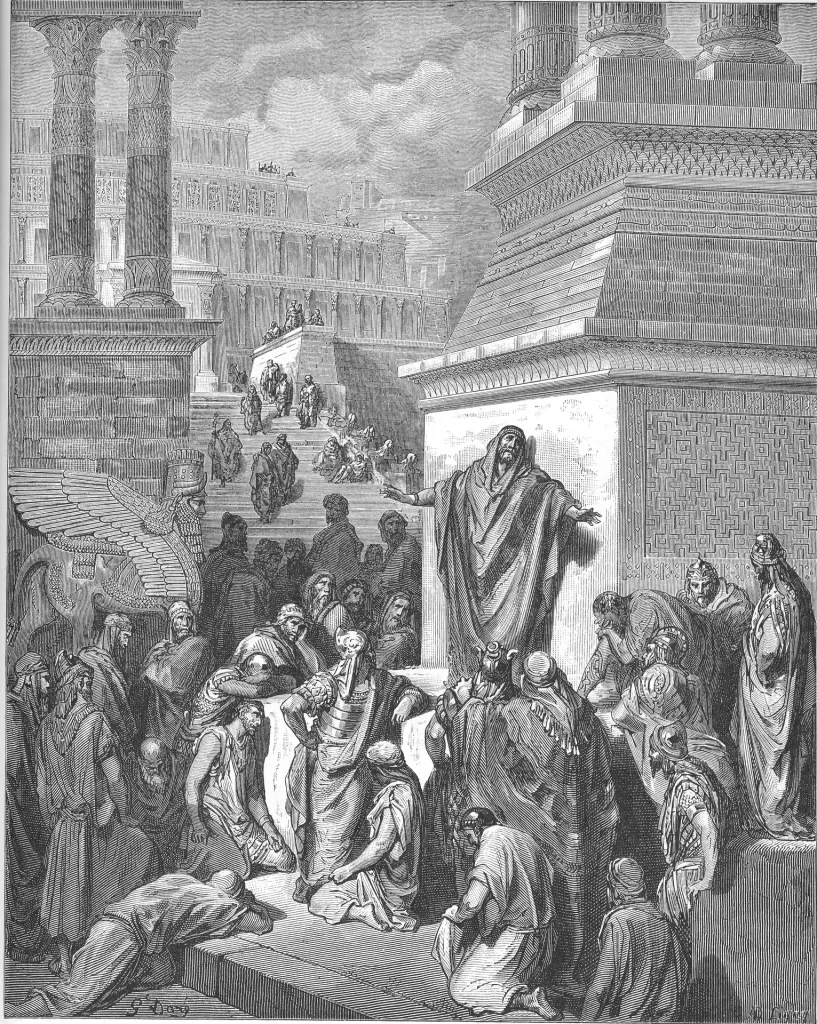
The command is the first one over again, and this time he goes. His sermon is five words in Hebrew: ʿod arbaʿim yom ve-Nineveh nehpakhet, עוֹד אַרְבָּעִים יוֹם וְנִינְוֵה נֶהְפָּכֶת. It names no god, gives no reason and offers no way out. Forty is the number of the rain in the flood, of Moses on Sinai and of Jesus in the wilderness. The Greek Bible gives the city three days. “Overthrown” is from hafakh, הָפַךְ, “to turn” or “to overturn,” the verb used of Sodom, and it can also mean to be turned round. Jonah means the first sense, and Nineveh takes the second.10
No city in the Bible repents so fast. The people believe before the king has heard, the king comes down from his throne into ashes, and even the cattle fast and wear sackcloth. What they are told to give up is ḥamas, חָמָס, “violence,” the word for what filled the earth before the flood. The king ends on the captain’s words exactly: ve-lo noved, וְלֹא נֹאבֵד, “that we perish not.” A foreign sailor and a foreign king have now said the same prayer, and both have been heard. God turns from the raʿah, the evil, that he had spoken.10
By the law’s own test this makes Jonah a false prophet: “if the thing follow not, nor come to pass, that is the thing which the LORD hath not spoken.” Jeremiah supplies the exception. If a nation “turn from their evil, I will repent of the evil that I thought to do unto them.” Jonah’s warning has worked by failing to come true.10
Josephus, retelling the book for Greek and Roman readers, could not let it stand. In his version Jonah “preached, that in a very little time they should lose the dominion of Asia. And when he had published this, he returned.” The fast, the king in ashes and the mercy are left out.11
It Displeased Jonah Exceedingly
But it displeased Jonah exceedingly, and he was very angry. And he prayed unto the LORD, and said, I pray thee, O LORD, was not this my saying, when I was yet in my country? Therefore I fled before unto Tarshish: for I knew that thou art a gracious God, and merciful, slow to anger, and of great kindness, and repentest thee of the evil. Therefore now, O LORD, take, I beseech thee, my life from me; for it is better for me to die than to live. Then said the LORD, Doest thou well to be angry? So Jonah went out of the city, and sat on the east side of the city, and there made him a booth, and sat under it in the shadow, till he might see what would become of the city.
— Jonah 4:1–5, King James Version.1
The Hebrew is stronger than “displeased.” Va-yeraʿ el Yonah raʿah gedolah, וַיֵּרַע אֶל־יוֹנָה רָעָה גְדוֹלָה, is “it was evil to Jonah, a great evil.” The raʿah that rose from Nineveh in the first verse, and that God has just turned away from, has come down on the prophet. Here he gives the reason he ran. He was not afraid for his life. He knew that God would forgive. He recites God’s own description of himself from Sinai, “merciful and gracious, longsuffering,” and treats the mercy as a fault.12
His anger reads as spite until his other prophecy is set beside it. Amos, preaching in the same kingdom in the same reign, saw what was coming: “I will raise up against you a nation, O house of Israel, saith the LORD the God of hosts; and they shall afflict you from the entering in of Hemath unto the river of the wilderness.” The Hebrew of the two prophecies opens with the same words, mi-levo Ḥamat, מִלְּבוֹא חֲמָת, “from the entering of Hamath.” Jonah’s border ran from there ʿad yam ha-ʿAravah, עַד־יָם הָעֲרָבָה, “unto the sea of the plain.” The nation Amos sees will crush Israel from there ʿad naḥal ha-ʿAravah, עַד־נַחַל הָעֲרָבָה, “unto the river of the wilderness.” The span is the same, measured twice. That nation was Assyria, and in 722 BCE it destroyed the northern kingdom and deported its people.13
The storyteller has taken the prophet whose word fixed Israel’s border and sent him to save the city that will erase it. Read that way, Jonah is not sulking over a lost reputation. He has been made the instrument of his own country’s ruin, and he would sooner die.
Abraham stood before a threatened city with the opposite wish. “Wilt thou also destroy the righteous with the wicked?” he asked over Sodom, and bargained for it. Jonah builds a hut east of Nineveh and waits to see whether the fire will come after all. Two of Jesus’s disciples once asked for the same view of a village that had turned them away: “Lord, wilt thou that we command fire to come down from heaven, and consume them?” He rebuked them: “the Son of man is not come to destroy men’s lives, but to save them.”14
The Gourd and the Worm
And the LORD God prepared a gourd, and made it to come up over Jonah, that it might be a shadow over his head, to deliver him from his grief. So Jonah was exceeding glad of the gourd. But God prepared a worm when the morning rose the next day, and it smote the gourd that it withered. And it came to pass, when the sun did arise, that God prepared a vehement east wind; and the sun beat upon the head of Jonah, that he fainted, and wished in himself to die, and said, It is better for me to die than to live. And God said to Jonah, Doest thou well to be angry for the gourd? And he said, I do well to be angry, even unto death. Then said the LORD, Thou hast had pity on the gourd, for the which thou hast not laboured, neither madest it grow; which came up in a night, and perished in a night: And should not I spare Nineveh, that great city, wherein are more than sixscore thousand persons that cannot discern between their right hand and their left hand; and also much cattle?
— Jonah 4:6–11, King James Version.1
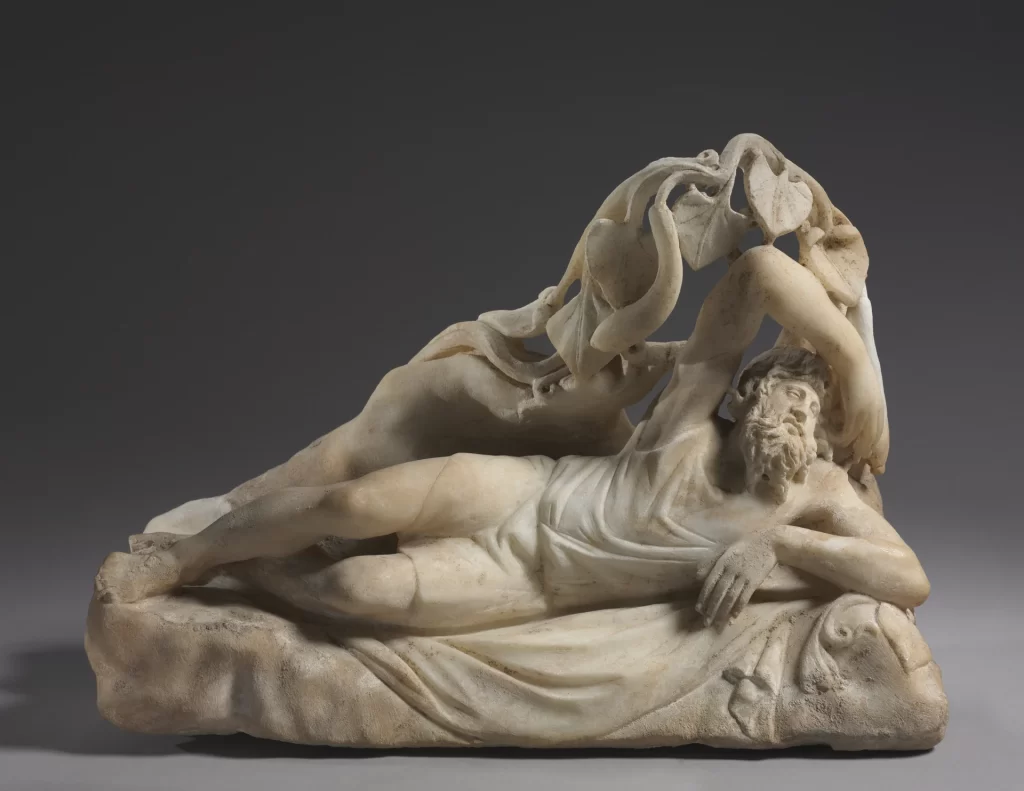
The plant is a qiqayon, קִיקָיוֹן, a word found nowhere else, perhaps the castor-oil plant. It is sent “to deliver him from his grief,” me-raʿato, מֵרָעָתוֹ, “from his evil,” the book’s word once more. He receives shade before he has changed his mind about anything, and for the first time in the story he is glad. Mercy has become something he can feel on his skin.15
The verb of the fish returns three times. God “prepared” the gourd, the worm and the wind, and the names change as he does it. YHWH Elohim, יְהוָה־אֱלֹהִים, “the LORD God,” appoints the plant. Ha-Elohim, הָאֱלֹהִים, “God,” appoints the worm and the wind. The rabbis read the four-letter name as mercy and Elohim as judgment. On that reading mercy gives the shade, judgment takes it, and the last question in the book, about sparing the city, is asked by the LORD.15
Jesus tells a parable about men who feel as Jonah does. Labourers hired at dawn see the latecomers paid the same and complain that they “have borne the burden and heat of the day.” The owner answers, “Is thine eye evil, because I am good?” The complaint is Jonah’s, down to the heat and the word evil. The labourers have lost nothing by the owner’s kindness. Jonah believes that God’s kindness to Nineveh will cost him his country.16
The argument turns on one verb. “Thou hast had pity” is ḥasta, חַסְתָּ, and “should not I spare” is aḥus, אָחוּס, from the same root. Jonah has cared for a plant he did not grow. God sets beside it a city of a hundred and twenty thousand people who cannot tell their right hand from their left, and the animals, who fasted with them.
Jonah does not answer. The book ends on the question.
Nineveh Is Laid Waste
Jonah’s five words came true in both their senses. Nineveh turned, and about a century and a half after Jeroboam’s prophet it was overturned. In 612 BCE the Babylonians and the Medes took it and burned it. The prophet Nahum wrote the song Jonah had wanted to sing: “Woe to the bloody city!” and “Nineveh is laid waste: who will bemoan her?” In the book of Tobit an old exile dying in Nineveh tells his son to get out, “for I surely believe those things which Jonas the prophet spake of Nineve, that it shall be overthrown.”17
Ezekiel has God state the rule that Jonah could not bear: “I have no pleasure in the death of the wicked; but that the wicked turn from his way and live.” The king of Nineveh had ordered that turn, away from “the violence that is in their hands.” The book asks a man to want the end of the wrong more than the ruin of the wrongdoer, and it asks it of the one man whose country was next.17
Two of the twelve short prophetic books are about Nineveh, and both end on a question. God asks Jonah, “should not I spare Nineveh?” Nahum asks the fallen city, “upon whom hath not thy wickedness passed continually?” The scroll of the Twelve keeps both, with one book between them.
Sources and Translation Notes
1. The Book of Jonah, King James Version, Wikisource, quoted complete. Hebrew from Mechon Mamre, where the verse the King James numbers 1:17 is 2:1. Greek of the Septuagint from Greek Wikisource. ↩
2. 2 Kings 14:23–27, King James Version; Hebrew from Mechon Mamre. Brown–Driver–Briggs: יוֹנָה, “dove”; אֲמִתַּי, from אֱמֶת. Hebrew of Jonah 1:2: כִּי־עָלְתָה רָעָתָם לְפָנָי. ↩
3. Hebrew of Jonah 1:3 and 1:5: וַיֵּרֶד יָפוֹ וַיִּמְצָא אֳנִיָּה; וְיוֹנָה יָרַד אֶל־יַרְכְּתֵי הַסְּפִינָה וַיִּשְׁכַּב וַיֵּרָדַם. Brown–Driver–Briggs, יָרַד, “come or go down, descend,” and רָדַם, “be in, or fall into, heavy sleep.” Joppa is יָפוֹ, a name traditionally linked with yafeh, “beautiful.” Tarshish as a far trading port: Ezekiel 27:12. Genesis 12:1–4. Psalm 55:6–8 and Genesis 8:9, King James Version. Septuagint, Jonah 1:5: Ἰωνᾶς δὲ κατέβη εἰς τὴν κοίλην τοῦ πλοίου καὶ ἐκάθευδε καὶ ἔρρεγχε. ↩
4. Mark 4:35–41, King James Version; Greek of 4:38 from the SBL Greek New Testament, Bible Gateway: Διδάσκαλε, οὐ μέλει σοι ὅτι ἀπολλύμεθα; Septuagint, Jonah 1:6: ὅπως διασώσῃ ὁ Θεὸς ἡμᾶς καὶ οὐ μὴ ἀπολώμεθα. ↩
5. John 11:49–50, King James Version; Greek from the SBL Greek New Testament, Bible Gateway: καὶ μὴ ὅλον τὸ ἔθνος ἀπόληται. ↩
6. Hebrew of Jonah 2:1, 2:3 and 2:7 (King James 1:17, 2:2 and 2:6): וַיְמַן יְהוָה דָּג גָּדוֹל לִבְלֹעַ אֶת־יוֹנָה; מִבֶּטֶן שְׁאוֹל שִׁוַּעְתִּי; לְקִצְבֵי הָרִים יָרַדְתִּי. Brown–Driver–Briggs, מָנָה, “count, number, reckon, assign,” and שְׁאוֹל. ↩
7. Qur’an 21:87–88 and 37:139–148, translated by Marmaduke Pickthall, The Meaning of the Glorious Koran (1930), sacred-texts: sura 21 and sura 37. ↩
8. Inana’s descent to the nether world, Electronic Text Corpus of Sumerian Literature 1.4.1, lines 173–175, a modern translation, retold; seven words are quoted. On the cuneiform writing of Nineveh as a fish within an enclosure: Yael Shemesh, “‘And Many Beasts’ (Jonah 4:11): The Function and Status of Animals in the Book of Jonah,” Journal of Hebrew Scriptures 10 (2010), article 6. ↩
9. Matthew 12:38–41, King James Version; Greek of 12:40 from the SBL Greek New Testament, Bible Gateway. Septuagint, Jonah 2:1: καὶ ἦν Ἰωνᾶς ἐν τῇ κοιλίᾳ τοῦ κήτους τρεῖς ἡμέρας καὶ τρεῖς νύκτας. ↩
10. Hebrew of Jonah 3:4, 3:8 and 3:9: עוֹד אַרְבָּעִים יוֹם וְנִינְוֵה נֶהְפָּכֶת; וּמִן־הֶחָמָס אֲשֶׁר בְּכַפֵּיהֶם; וְלֹא נֹאבֵד. Brown–Driver–Briggs, הָפַךְ, “turn, overturn.” Septuagint, Jonah 3:4: ἔτι τρεῖς ἡμέραι καὶ Νινευὴ καταστραφήσεται. Genesis 6:11 and 19:25. Deuteronomy 18:22 and Jeremiah 18:7–8, King James Version. ↩
11. Josephus, Jewish Antiquities 9.208–214, translated by William Whiston (London, 1737), Lexundria. ↩
12. Hebrew of Jonah 4:1–2: וַיֵּרַע אֶל־יוֹנָה רָעָה גְדוֹלָה; אֵל־חַנּוּן וְרַחוּם אֶרֶךְ אַפַּיִם וְרַב־חֶסֶד וְנִחָם עַל־הָרָעָה. Exodus 34:6, King James Version. ↩
13. Amos 6:14, King James Version. Hebrew of 2 Kings 14:25, הֵשִׁיב אֶת־גְּבוּל יִשְׂרָאֵל מִלְּבוֹא חֲמָת עַד־יָם הָעֲרָבָה, and of Amos 6:14, וְלָחֲצוּ אֶתְכֶם מִלְּבוֹא חֲמָת עַד־נַחַל הָעֲרָבָה, from Mechon Mamre. The fall of the northern kingdom: 2 Kings 17:5–6. ↩
14. Genesis 18:23 and Luke 9:54–56, King James Version. ↩
15. Hebrew of Jonah 4:6–8 and 4:10–11: וַיְמַן יְהוָה־אֱלֹהִים קִיקָיוֹן; לְהַצִּיל לוֹ מֵרָעָתוֹ; וַיְמַן הָאֱלֹהִים תּוֹלַעַת; אַתָּה חַסְתָּ עַל־הַקִּיקָיוֹן; וַאֲנִי לֹא אָחוּס עַל־נִינְוֵה. Brown–Driver–Briggs, קִיקָיוֹן and חוּס, “pity, look upon with compassion.” Genesis Rabbah 33:3 on the two names. ↩
16. Matthew 20:1–16, King James Version. ↩
17. Nahum 3:1, 3:7 and 3:19, King James Version. Tobit 14:4, King James Version, Apocrypha, sacred-texts. Ezekiel 33:11, King James Version. ↩